
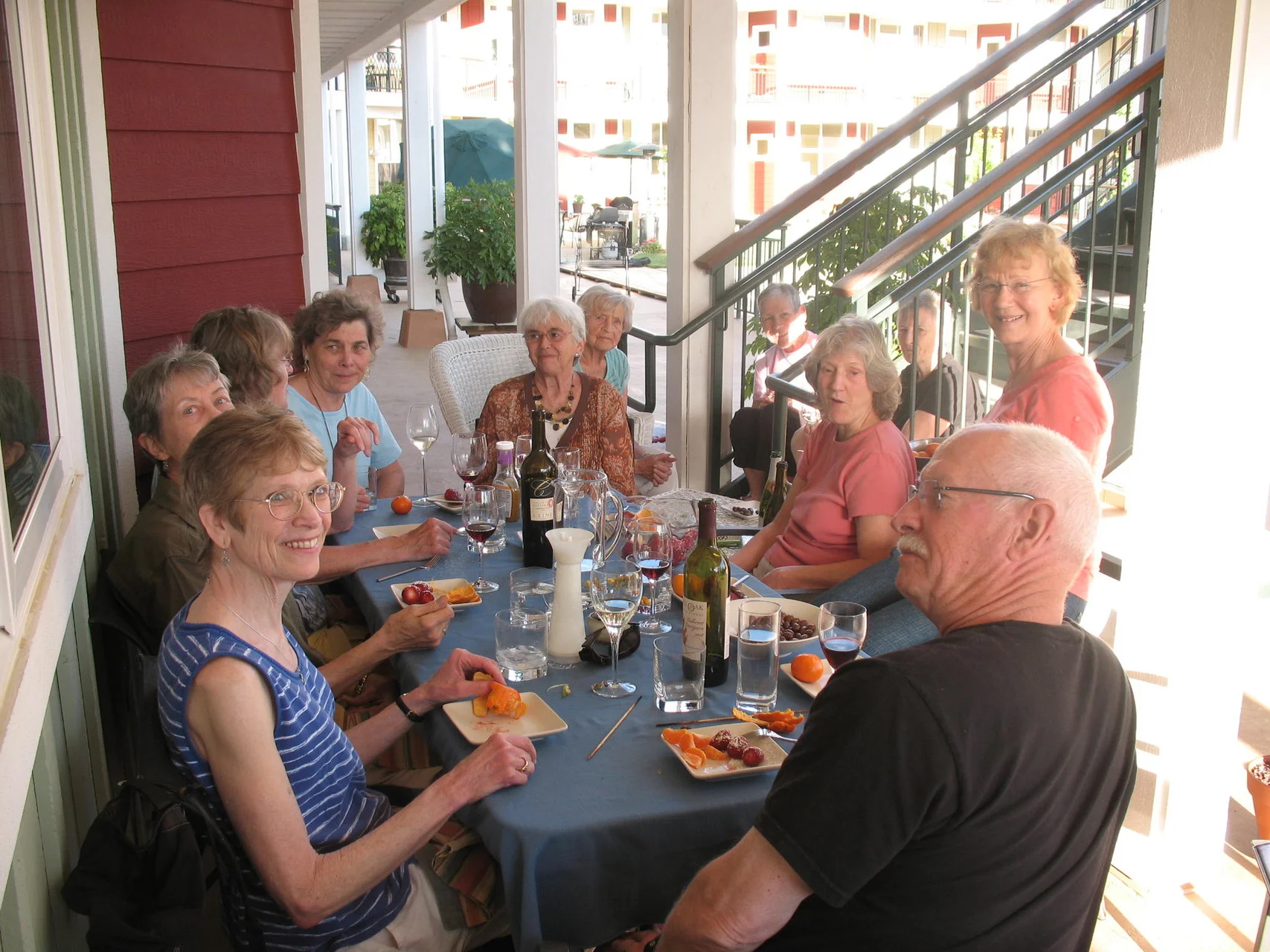
A New Look at Getting Older: Inspiring Adults 55+ at the Northeast Cohousing Conference

Wolf Creek Lodge, Grass Valley, CA. Architecture by McCamant & Durrett Architects
Older adults are discovering the value of taking control of their lives. Socially, financially, and environmentally it makes sense to live near people who care about you, but until you can work with others to create this scenario, it is just a good idea and nothing else. Senior cohousing communities, and groups inspired by cohousing, grow from that need to move things forward into a collective of organized and forward-thinking activists. The result far exceeds expectations, in many cases.
Being organized is being in control. While senior living facilities are taking steps to support their residents more than ever before, they still cannot offer what senior cohousing groups can. One way to begin this process is by taking Study Group 1 (Chapter 7 of The Senior Cohousing Handbook: A Community Approach to Independent Living ). After SG1, senior cohousing groups go through a series of workshops which develop cohesiveness and clarity within, along with setting expectations and later co-designing the community of their dreams. It is important to note at this point that none of this can happen without the group being on the same page and out of denial. Cohousing communities aren’t created by one visionary, but by many who share in the vision and, through consensus and being prepared, can decide what is best for all.
The result is a neighborhood that not only symbolizes their desire to take an active role in their aging scenario, but also their commitment to supporting, listening to, and living in community with each other. Learn more about senior cohousing at the Northeast Regional Cohousing Conference September 21 – 23, 2018. Cohousing expert, Charles Durrett, will lead Senior Cohousing 101, an all-day intensive exploring an effective solution to senior housing.
The intensive is limited to 20 people, so early registration is encouraged. Sign up here:
https://cohousingassociationoftheunite.regfox.com/northeast-cohousing-summit
Senior Cohousing 101 will explore the senior cohousing movement, both concept and its history, and why it is gaining popularity and proving to be a great solution to the senior housing challenge in the U.S. today. Participants will view examples of senior cohousing communities and, through group activities and discussion, will discover solutions for supporting themselves and their community age in place successfully.

For more information and an in-depth look at senior cohousing, Durrett and McCamant & Durrett Architects will be hosting an online facilitator training for Study Group 1 Aging Successfully. This 10-week course will begin Oct 10 with meetings once per week to learn how to organize local efforts for seniors, by seniors, in their area. Those interested in becoming a facilitator should contact Lindy at lindy.sexton@cohousingco.com.
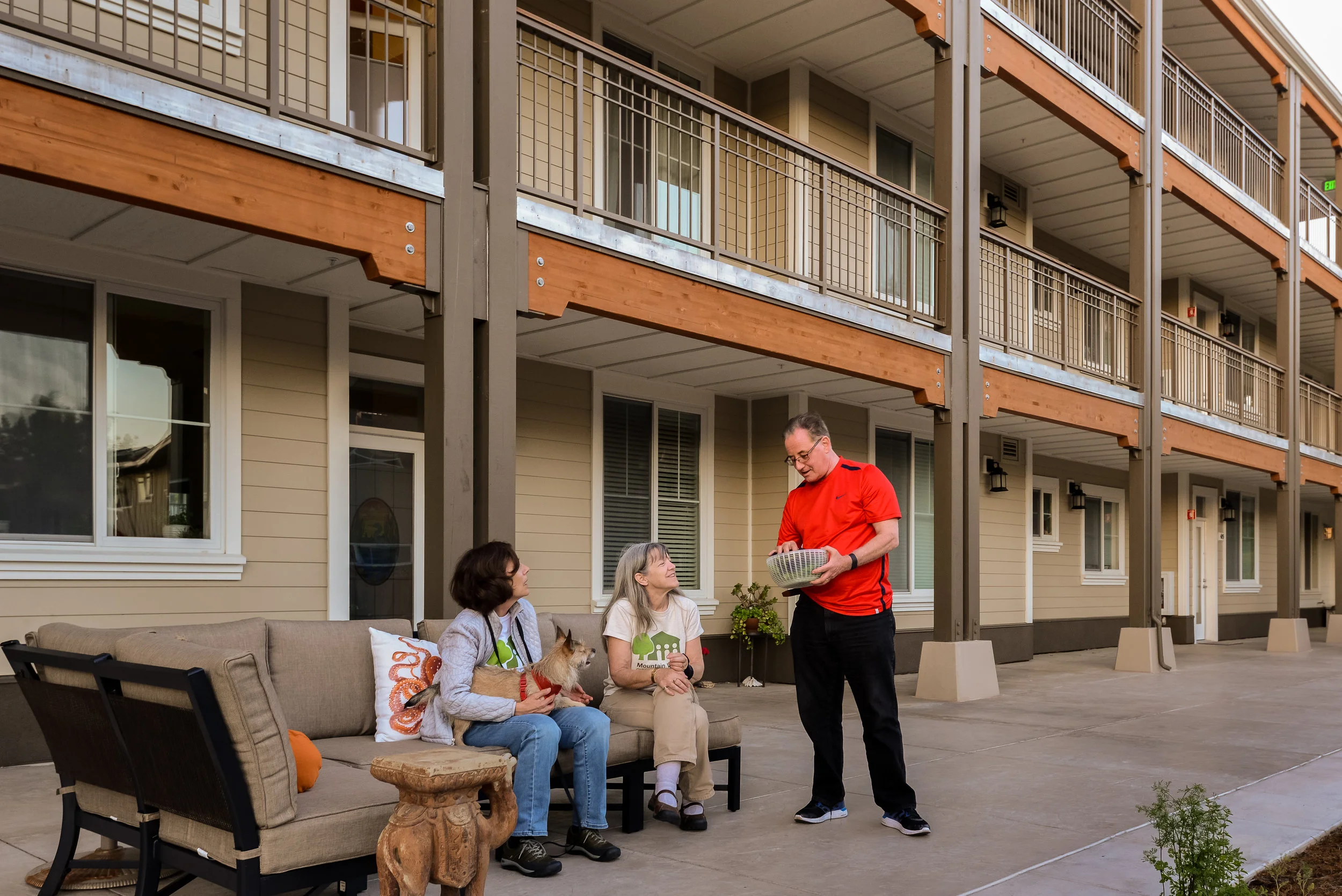
Impact of Senior Cohousing

Silver Sage Senior Cohousing, Boulder, CO. Architecture by McCamant & Durrett Architects
There is a senior housing crisis in this country. In the United States, traditional senior housing options aren’t meeting the needs of older adults. Many attempts to put seniors in community have proven to work short term, but funding and employee retention continue to strain these organizations. Senior support, like Meals on Wheels, drains local economies and is constantly at risk of being dropped, which could leave seniors without access to proper nutrition and socialization. These services are also offered at the expense of the environment as vehicles drive hundreds of miles each day to bring services to older adults living alone, in their big ranch houses. As the population gets older, we are running out of options. One solution, senior cohousing, cohousing for adults 55+, has proven to mitigate loneliness and provide support to keep older adults in their homes for longer without draining government resources, and those are just some of the perks.
Older adults around the United States (and around the world) are making a strong case for why living in a high functioning community is important to them, economically, physically, emotionally, and socially. What seniors need (and want) is to be in the driver seat, to take control of their aging scenario. What they desire is to create their own community. Senior cohousing is gaining popularity, meeting the needs of seniors internationally, and is proving to be a solution to housing seniors in the neighborhoods of their dreams, supported by their neighbors and friends.

Mountain View Cohousing, Mountain View, CA. Architecture by McCamant & Durrett Architects
As a national leader and innovator, Charles Durrett has dedicated his career to creating cohousing neighborhoods, including a dozen senior cohousing. His book, “The Senior Cohousing Handbook: A Community Approach to Independent Living is an invaluable resource used by cohousing groups around the world and his continued dedication to appropriately housing older adults propels much of his life’s work. Durrett will be leading an all-day intensive Senior Cohousing 101 at the Northeast Cohousing Conference on September 21, 2018. Participants will learn about cohousing, discuss challenges in senior housing, and explore why senior cohousing just makes sense. The intensive is open to 20 people so early sign up is highly encouraged.
Register at: https://cohousingassociationoftheunite.regfox.com/northeast-cohousing-summit
We look forward to seeing you there!
For more information and an in-depth look at senior cohousing, Durrett and McCamant & Durrett Architects will be hosting an online facilitator training for Study Group 1 Aging Successfully. This 10-week course will begin Oct 10 with meetings once per week to learn how to organize local efforts for seniors, by seniors, in their area. Those interested in becoming a facilitator should contact Lindy at lindy.sexton@cohousingco.com.

The value of thinking about the "things"
Village Hearth Cohousing recently completed the Design Development and Prioritization Workshops (Workshops 5 and 6) with McCamant & Durrett Architects. Through the years, groups often ask me, “why do the workshops matter?” My answer is simple: Cohousing isn’t about reinventing the wheel. As you read on, you’ll see how the later workshops are just as important as the earlier ones and why each plays an integral role in the success of a cohousing community– in making it theirs, the one that fits like a glove, one that they own, emotionally. They are where trust it built. These participatory design workshops are where the community is built, not brick-by-brick but decision-by-decision.

Design Development:
At the surface, the Design Development Workshop (Workshop 5) is focused on stuff: hundreds of commercial products. The details and even the “stuff” have a profound impact on the success of communities, right alongside large-scale decisions like the site plan and common house design.
For example, consider your windows. A typical homebuilder in your area might select one window brand, while we might select another. There are many other reasons we have selected this window, but ease of operation and clarity of view alone make it ideal for senior cohousing; as you walk home and see a neighbor at the sink doing some dishes, you can wave to them, they can easily and quickly open the window, and you can chat or make a date to meet up at the common house. Altogether, the ensemble of products will form a tapestry that makes your house and your community feel like home.
This workshop is also important for the success of a community in the context of the development process. The Design Development Workshop is not just about energy efficiency, but that’s a big part of it. The process we facilitate -- based on years of experience and researching specifics to your region -- will enable you as a group to arrive at high-quality decisions by making effective use of your time and effort.

Prioritization:
This workshop is where costs that are perceived to be potentially above the budget are prioritized. Amenities are prioritized based on lifestyle, sustainability, facilitating community and all of the other goals and values of the group. Some amenities can be offered as options on a household-by-household basis (e.g. washing machines hook-ups, etc.) and others omitted completely (and others added.) The workshop process ensures that all members’ input is included and evaluated, at the same time, with all the necessary information on the table, using a very deliberate process.
The Prioritization Workshop is a very values-laden workshop. While reconciling little creature comforts, it will be important and sometimes challenging to keep the big picture in mind (community, cost, aesthetics). Though these little creature comforts are equally important because if we’re going to make community real, we have to make it even more comfortable than typical homes—which turns out to be very easy to do.
Both Design Development and Prioritization Workshops symbolize a huge step forward to getting a cohousing community built, including maintain a control on budget and finding what works for the entire community. This structured and intentional process allows groups to arrive at high-quality decisions in a matter of months, rather than other communities we have watched arrive at lower-quality decision after years of wasted time and energy, too much acrimony, and too many people dropping out of the group as a result.

If you’re interested in learning more about how the design workshops can influence the creation of your community, let’s talk.
Stewarding Your Environment

This window works great now, but what about 2 years from today? How can I keep it working great for years to come?
Quimper Village residents are packing their belongings. The group will open the doors to their new home, the first move-in being October 21 (almost three years to the day after they did the Getting-It-Built Workshop with Katie and me which at the time they still didn’t have land for.) Their home, a community that they helped to create. A community designed to support aging in place, where everyone knows and cares about one another. A community with a perfect balance of community and privacy.
As with all types of ownership, upkeep is of the utmost importance. Cleaning the gutters and the windows might seem like tedious tasks, but knowing how to do it (and how often) can make a great impact on performance. It also makes you as an owner proud of where you live.
So how do I keep my home running smoothly for years to come? What do I need to be aware of? A couple of weeks ago, I went to Port Townsend to hang out with the beautiful Quimper Villagers and take them through the final workshop, the Physical Plant Maintenance Program (PPMP.)
"It doesn't pay to design an organ if no one knows how to play it." Or in this case, it is an orchestra—dysfunctional if everyone is playing a different score. When it comes to the long-term social success, this workshop is just as important as every other. Deferred maintenance saddles subsequent years with less happiness. And the meetings that go along with deferred maintenance are never fun, “Now why didn’t we deal with this two years ago?”

Quimper Village is ready for its villagers!
Over a long day, Quimper Villagers toured the new neighborhood as we discussed the right way to refinish the wood tables or maintain the grass and concrete. Though this wasn’t surprising (in the past 3 years of working with them, I grew accustomed to their attention to detail,) I found that this workshop was important to them. It is important to anyone living in a community with common areas. As you know our office mantra is, “If it doesn’t work socially, why bother?”
Although most of you have successfully maintained your own houses for years, doing so in a cohousing community is different and requires additional skills and systems. I’m not claiming to be a maintenance expert, but I know a think or two about the “tragedy of the commons.” This is real – don’t let it happen to you. "Oh, I thought that someone else was going to take care of this,” or “Oh, I thought you were," or “I thought somebody would notice that.” Or my favorite, “Oh I just assumed that that was being taken care of.” In this way, deferred maintenance inadvertently happens all the time, but it can be mitigated with just a couple of skills. That’s what this weekend was all about (also described in Happily Ever Aftering in Cohousing.)

Quimper Villagers listen intently to a lecture on how to maintain the toilets, windows, and the kitchen sink, plus more. Though it may seem like a no-brainer keeping up a community requires organization and guidance.
The PPMP Workshop addresses tasks that need to be performed regularly as well as signs that a problem has occurred. Every individual needs to know what they are responsible for and how what red flags need to be addressed immediately.
Maintenance is too often the Achilles heel of cohousing because “someone else volunteered to take care of it,” so, therefore, I have no responsibility. Wrong—your responsibility is to set those volunteers up for success. So, this workshop is the absolute best way of solving these problems—with knowledge. When everyone does this workshop the knowledge becomes common, and it is much less of an issue later.
Everything in the project is of the earth, and it is in a hurry to get back to the earth—that’s entropy. Being a part of a cohousing community means you are the stewards. Maintenance can be a positive and community building experience if you prepare for it.