Design Process in Cohousing
Interested in starting a cohousing community?
You’re starting in the right place.


For nearly four decades, our work has been grounded in a participatory design process that brings future residents together from the earliest stages of planning to move in. By engaging community members to shape the community they will call home, we help create designs that foster meaningful relationships, neighborhoods that reflect shared values, and support long-term success.
With extensive experience and a proven track record of helping more than 55 communities move from concept to completion, we provide the expertise and project management needed to navigate every stage of development. While each project is unique, our approach has consistently helped groups overcome challenges, build consensus, and create communities that thrive for generations.
Whether you are just beginning to explore the idea of cohousing or are ready to take the next step toward development, our team is here to guide you throughout the journey. We combine innovative development strategies, collaborative planning, and practical experience to help create engaging, resilient, and sustainable communities where people can truly flourish.

Already have a group?

Feasibility and Development Process
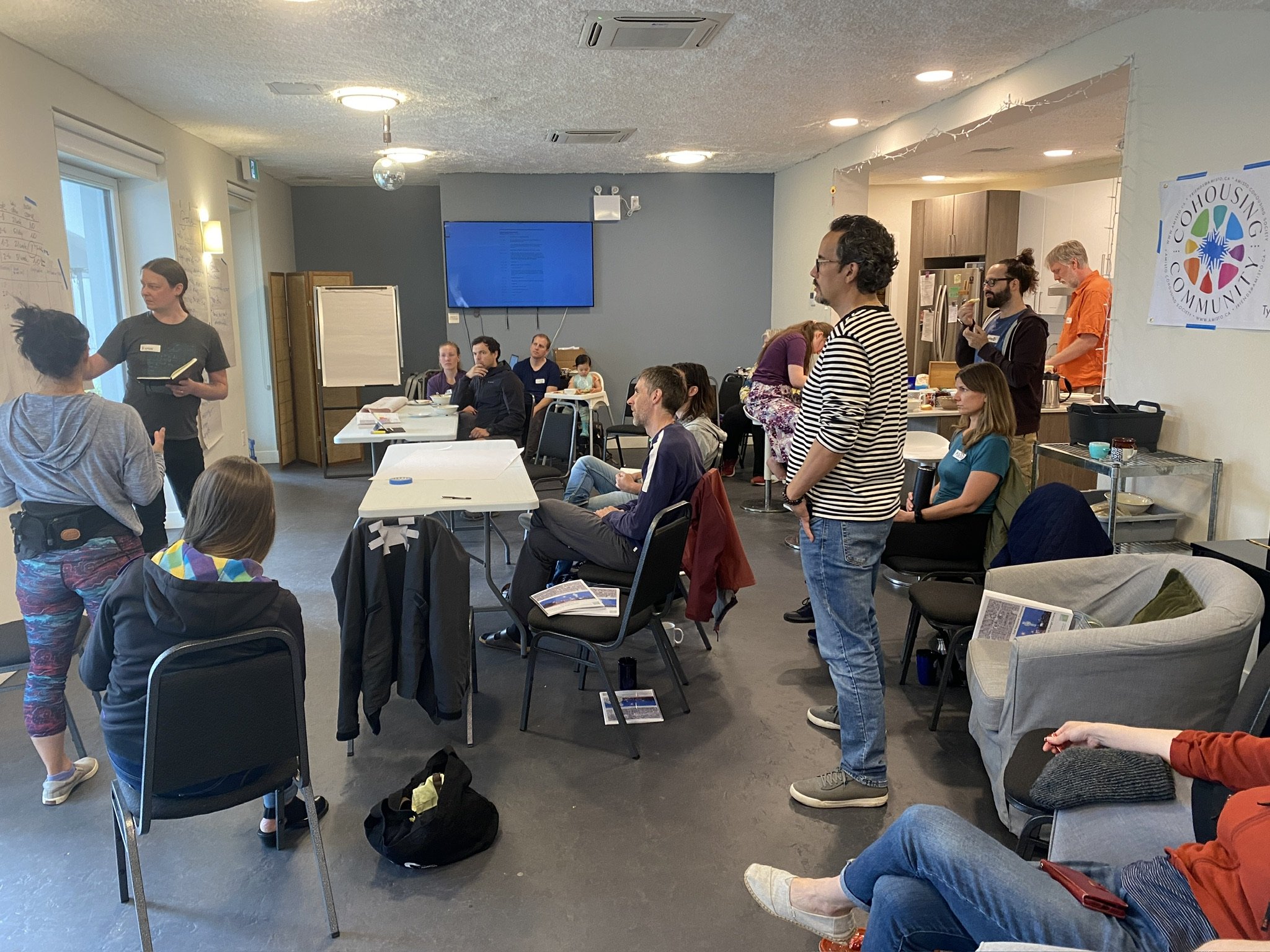
Feasibility and Development Consulting
Our first step in the design process is to examine the issues that will determine the project’s feasibility and the best strategy for proceeding. We use tools such as the working Feasibility Site Plan to help this process along.
We explore the following questions in the Feasibility Study:
Is there a market?
What is the best strategy for developing the project on this site?
What are the optimal sizes and building types? What specific design possibilities work?
Budget and scope of the project: Is the proposed project financially viable?
Site analysis: zoning, utilities, drainage, etc.
Is the site structurally sound? What will be required in the way of soils tests, seismic upgrades, etc.?
How will other site considerations, such as sound levels, traffic, trees, grade, etc., affect the project?
Are there any toxins or hazardous materials to be dealt with?
What other cost, planning, and design constraints might the project run into?
What are the preliminary civil engineering questions (paving, grading, drainage, etc.) and structural engineering questions (structural system, soils, etc.)?
Preliminary project scheduling.
By addressing these questions up front, we can avoid costly and frustrating surprises down the road.
Public Presentation
The Cohousing Company kicks off each new project with a dynamic, in-depth public presentation designed to introduce the concept of cohousing to local communities and a variety of renditions.
This event, led by Charles Durrett, an expert in cohousing design and development, serves as an informative introduction to the benefits, design principles, and potential of cohousing as an alternative model for living and community-building. The presentation explains the transformative impact of cohousing on individuals, neighborhoods, and society. Charles will discuss how cohousing creates more sustainable, connected, and resilient communities by empowering future residents to be actively involved in both the design and management of their homes. This discussion often sparks the local interest needed to successfully launch the project. This initial presentation is typically held on a Thursday evening. During the conclusion, we warmly invite all who are interested to join us at the follow-up meeting, a day or two later. The follow-up meeting is where we will collaboratively explore the next steps toward our shared vision.
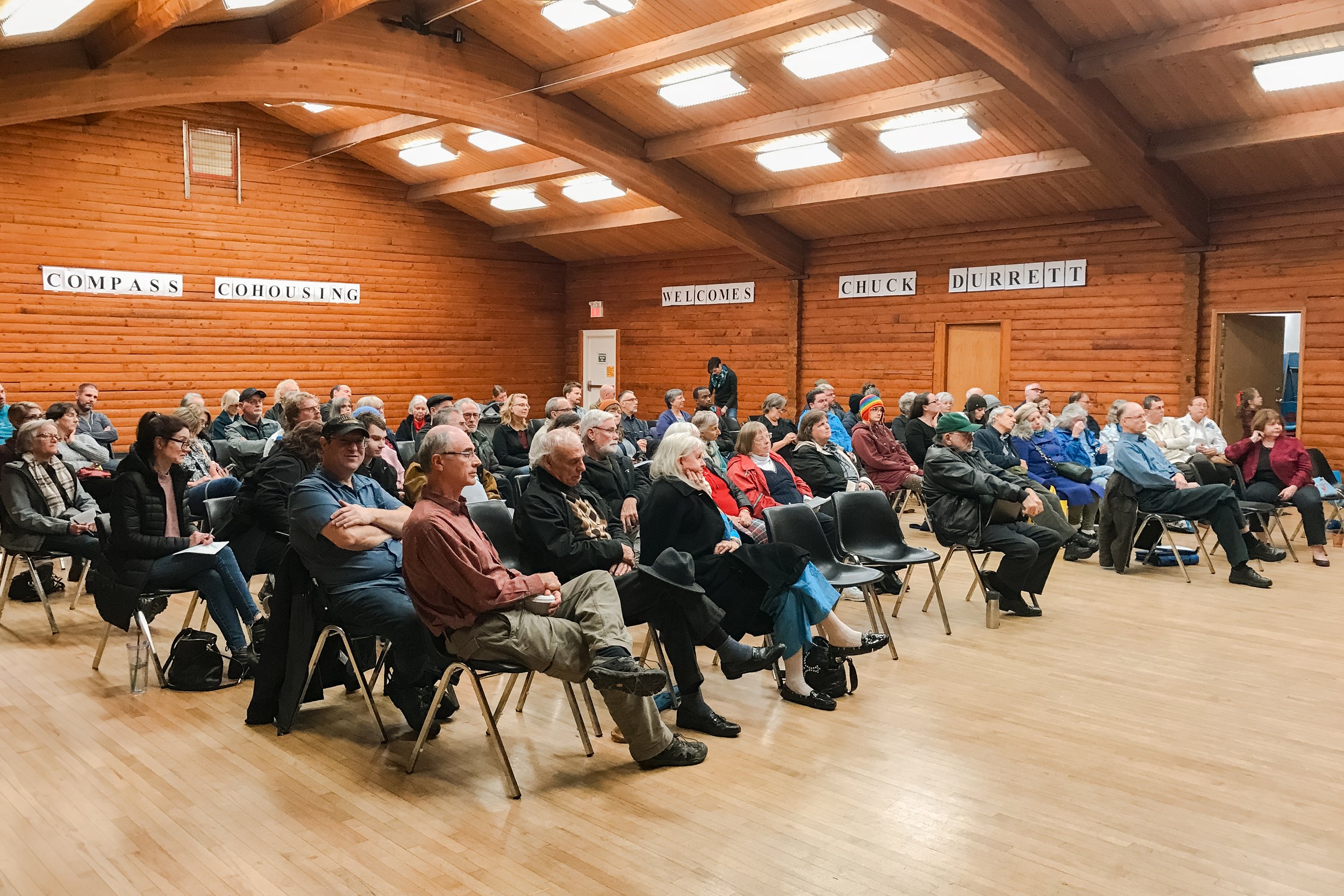
Engaging with the community early on can build enthusiasm and support for your project. Hosting informational meetings can provide an opportunity to gather input, address concerns, and rally interest among potential residents. The seminar acts as a launchpad for forming the initial umbrella group, bringing together interested individuals to begin the process of planning and organizing the next steps toward developing a new cohousing community. This inclusive approach not only strengthens your project's foundation but also creates a sense of ownership among future members of the cohousing community.
Getting-it-Built Workshop
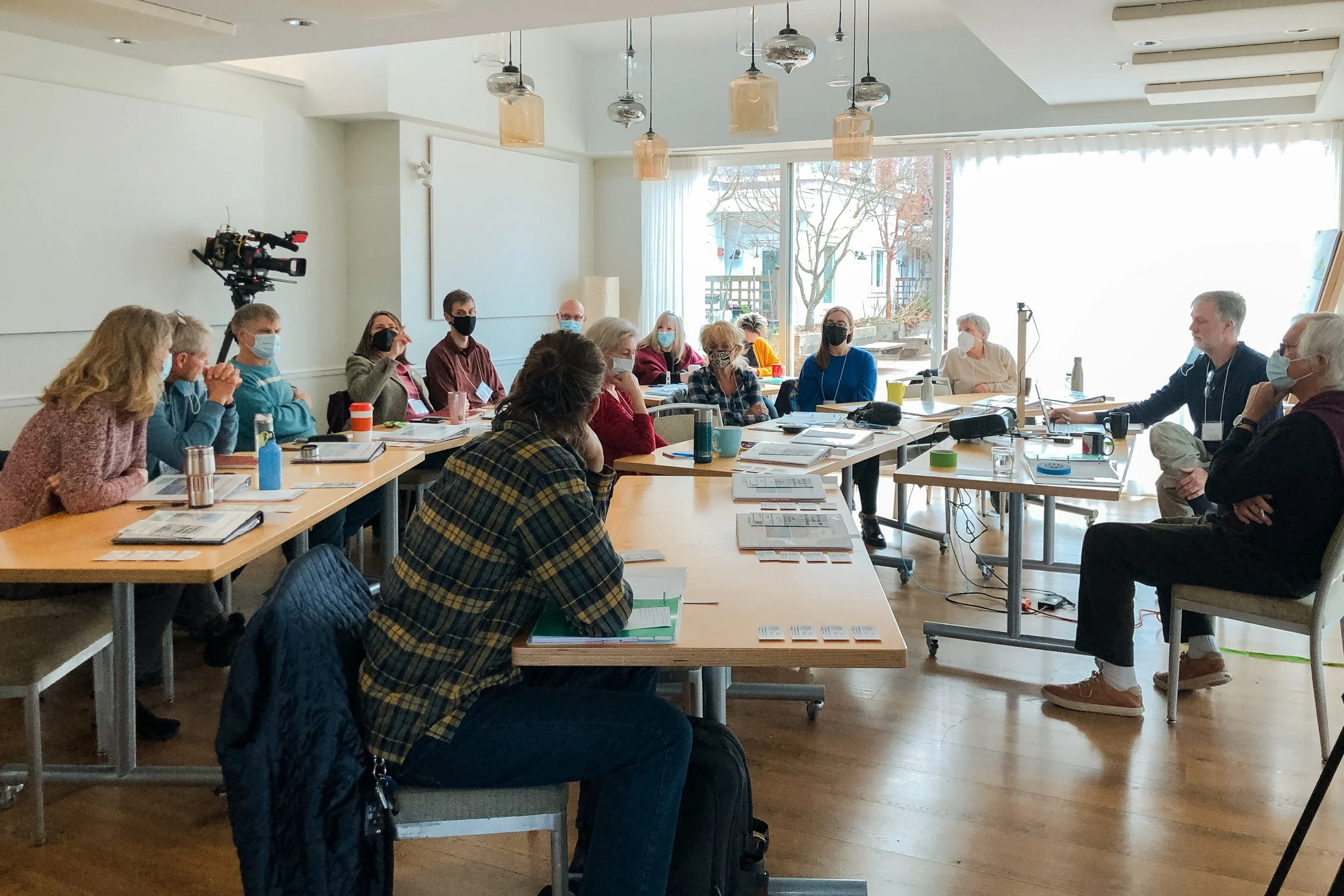
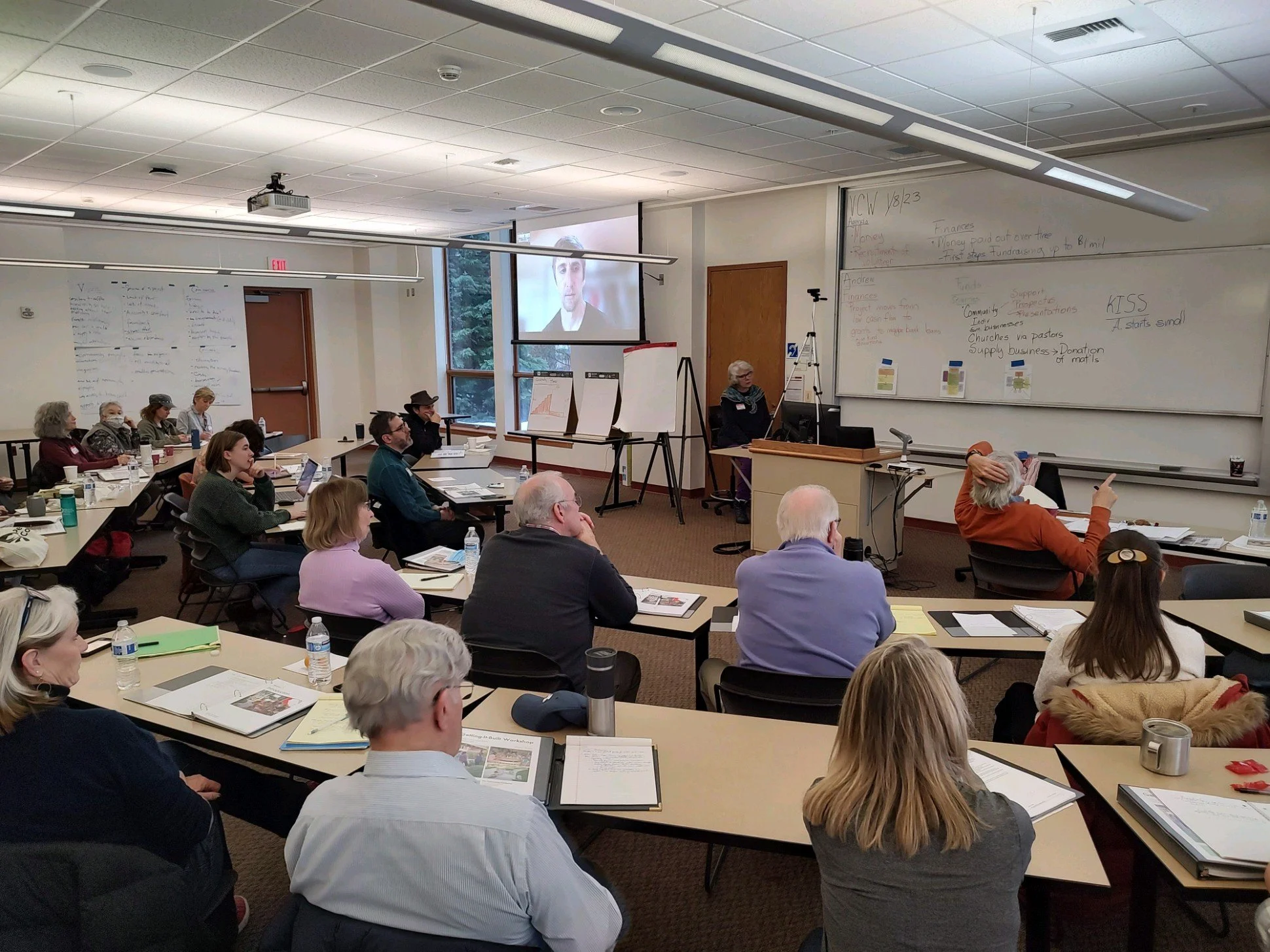
The Getting-It-Built Workshop provides future residents with a comprehensive understanding of the development process and empowers them to take active roles in making key decisions at every stage. The goal is not only to teach but to build a sense of ownership and collaboration among all participants, ensuring the project reflects the collective vision and values of the future community.
The Getting-It-Built Workshop is the first step in transforming future residents from interested participants into active co-developers of their own cohousing community. This hands-on, immersive workshop equips attendees with the tools, knowledge, and confidence needed to take ownership of the development process, from initial concept to construction. This workshop is a customized project-based process led by Charles Durrett. This workshop can be done with or without an established site.
More cohousing communities in North America have been successfully launched by this workshop than by any other means. It provides focus to your group’s time and energy, and aids in moving a project past initial feasibility to getting the required commitment and buy-in from a group of community members, investors, project developers and other professionals. This is an efficient and necessary step for the integration of the project budget and financing, the design and development, and the community building and sales required for a successful cohousing project.
Over the course of the workshop, participants will learn a step-by-step, month-by-month roadmap for how to bring their cohousing project to life. Facilitated by experienced developers and cohousing experts, the workshop breaks down the development process into manageable stages and provides a clear and deliberate plan for each phase.
Schematic Design Process
Site Programming and Schematic Site Design Workshop
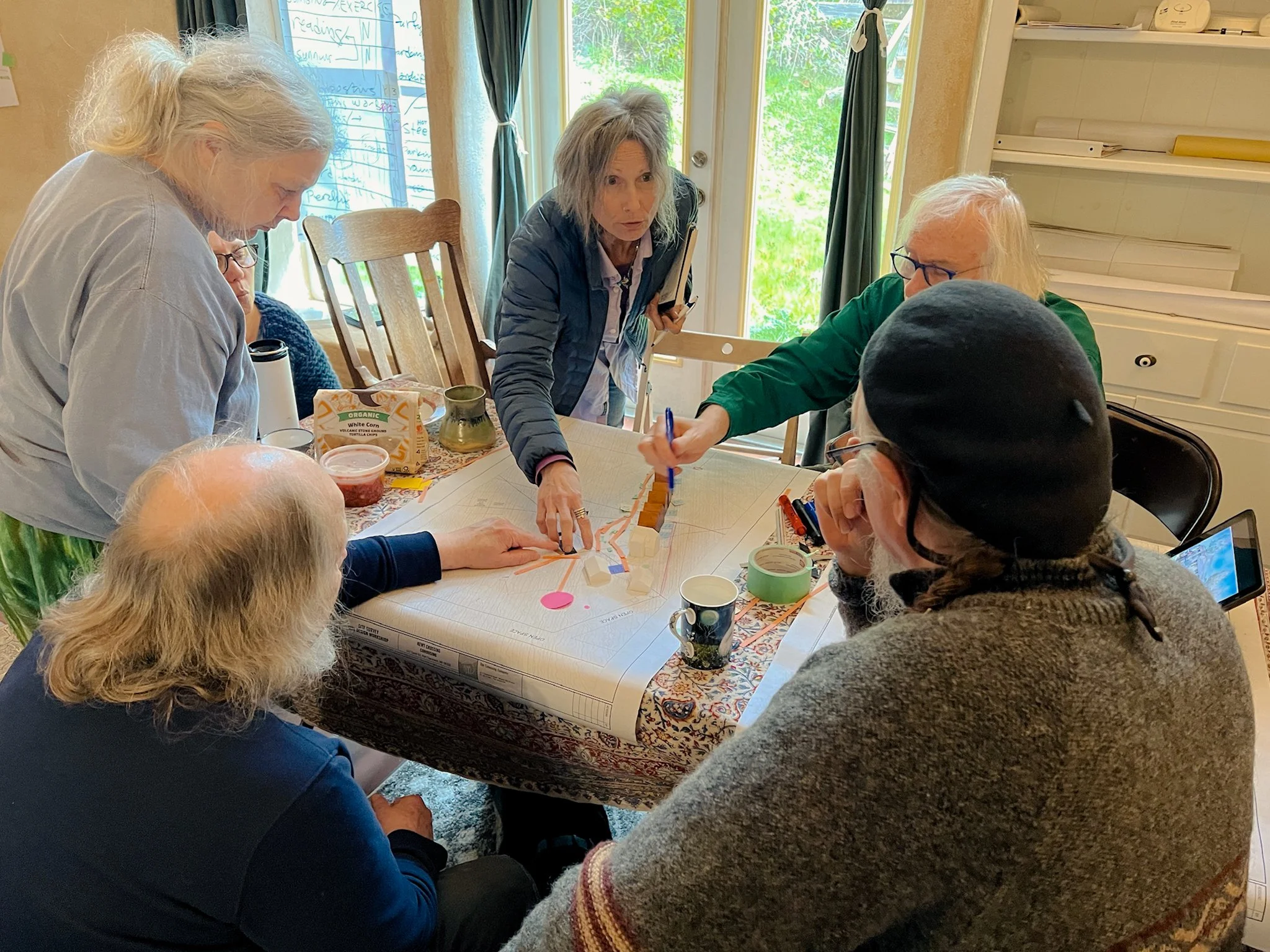
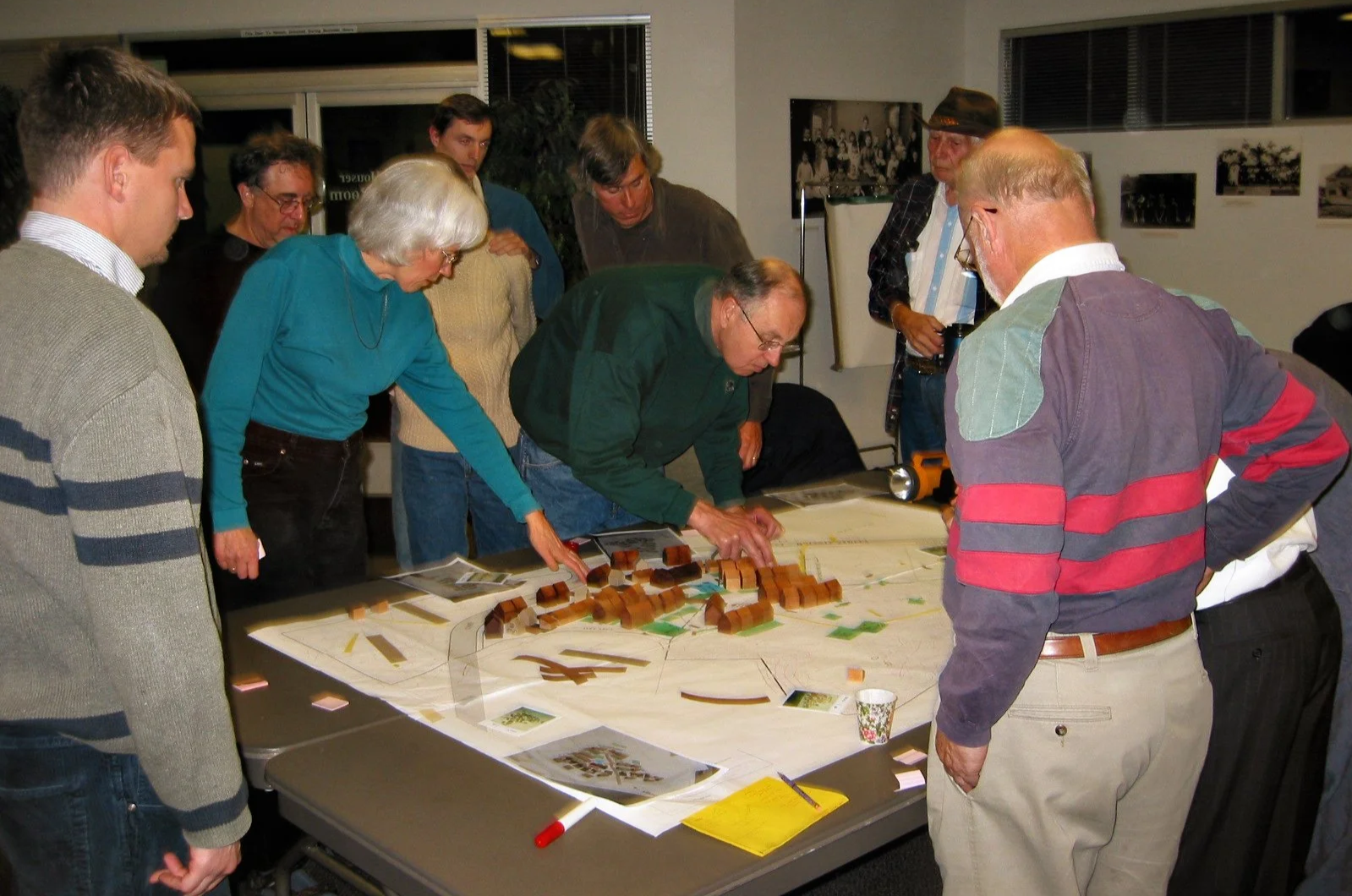
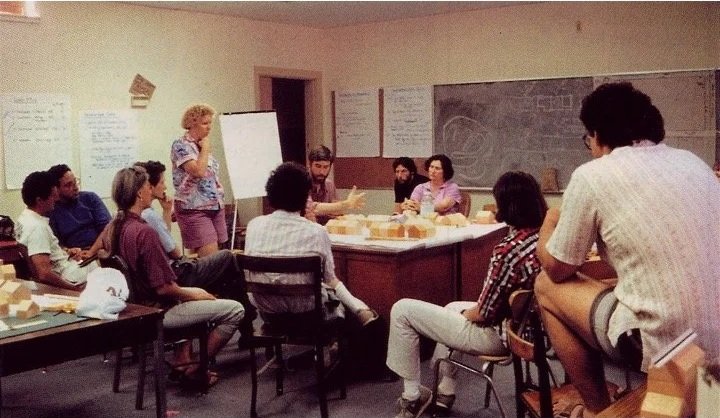
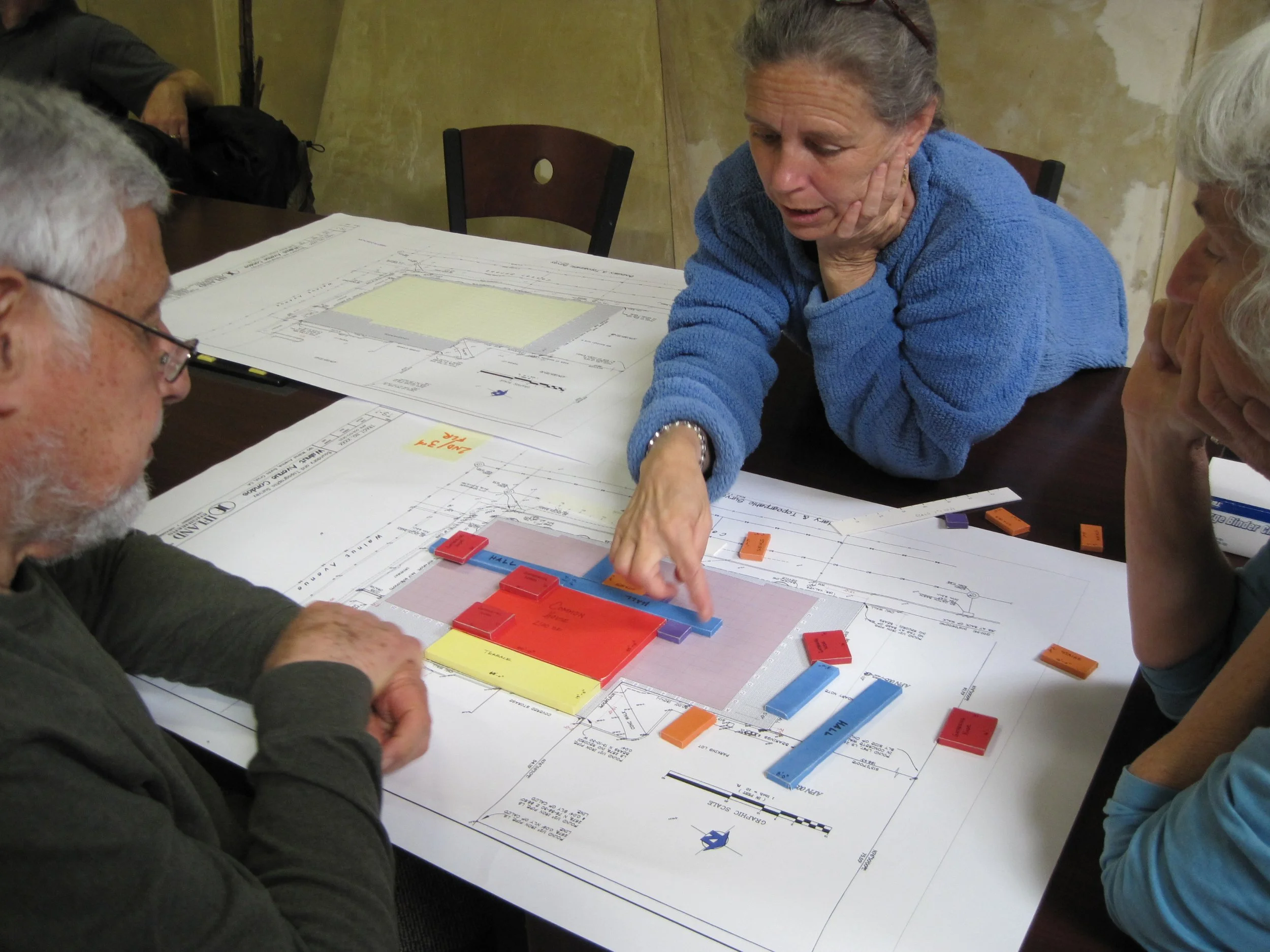
Site Programming is the process used to arrive at the set of criteria on which the site design is based. The programming phase is where the project is built—not brick by brick, but decision by decision. This is the time when we create a common vocabulary for the project, and determine preferences and requirements to build into the overall picture before time is invested in design.
The most important purpose of the SiteProgram is to incorporate the values of the future residents, especially regarding the life between the buildings.
A thorough programming process is essential for maintaining an orderly and cost-effective design process later in the project. We have found that many problems that people encounter with the design of their cohousing communities can be avoided with a thorough programming process, otherwise known as “understanding the design problem.” We go through a detailed list of criteria, looking for program needs that translate into size, location, and other design requirements and qualities.
This programming process will allow us to consider all important issues up front, help us to understand the ramifications of our decisions and reduce the need for later backtracking and redesign. Along the way, we will be making recommendations based on past experience and professional knowledge. We then put all of the requirements of the project into a clearly organized written program that will be a reference throughout the design process.
These are the kinds of things we look at in the two-day (and two evenings if necessary) Site Design Workshop:
• Goals, needs, wishes, limitations, expectations, aesthetics.
• Activities to occur outdoors that facilitate goals: areas for walking, playing, gathering, gardening, privacy, sitting, talking, meeting, working, etc.
• Site context: Weather, noise, solar access, vehicular access, handicap accessibility, sense of entry, site analysis.
• Codes and regulations: Outline of planning and building department parameters.
• Budget and priorities: Preliminary cost analysis, usually based on area and/or volume, to be refined later.
• Project Planning.
• Car parking
• Bicycle parking
• Electric cart parking
• Define places: specific qualities of the places determined to be necessary to accommodate the activities and goals
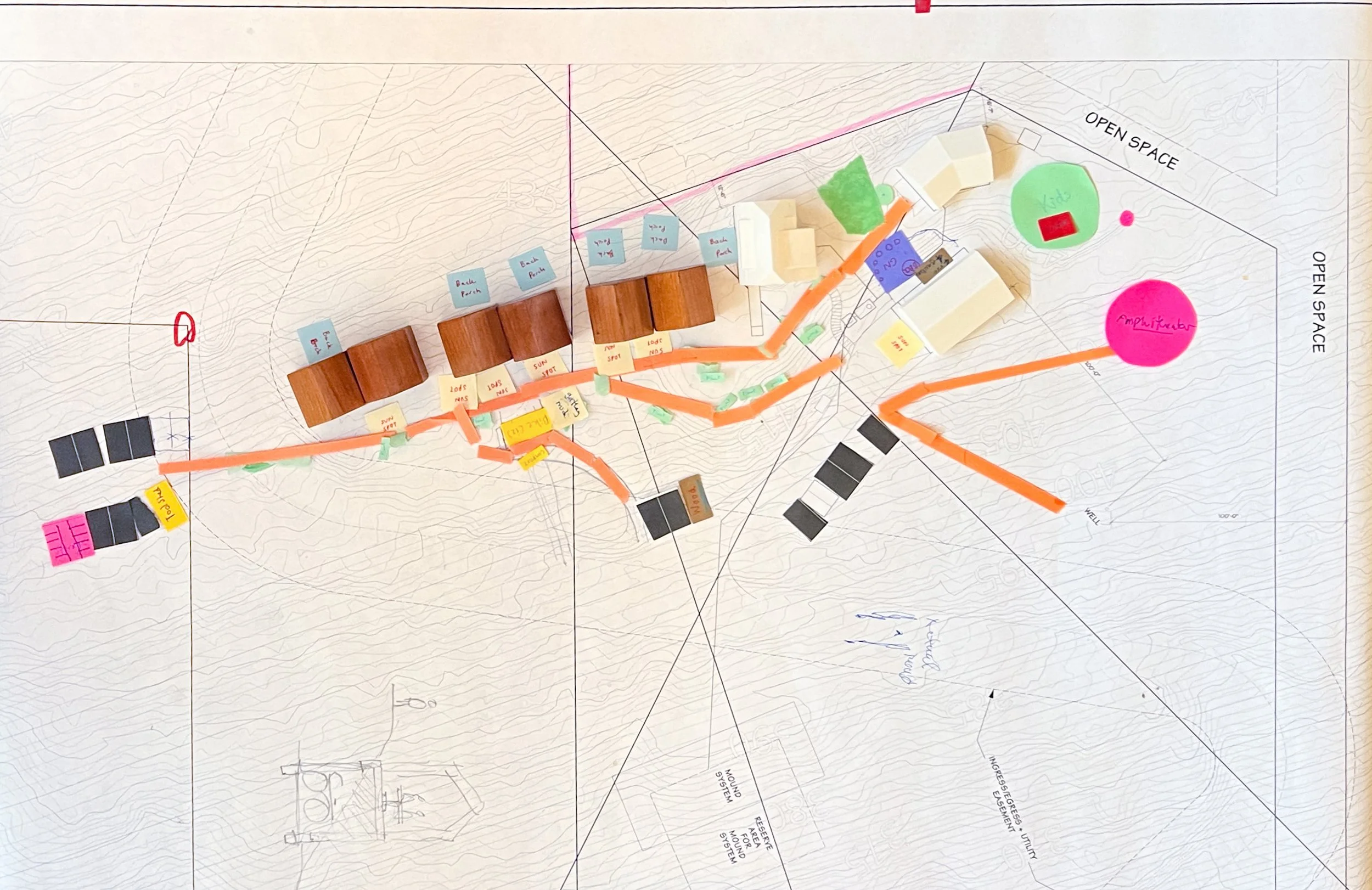
The Site Programming finalizes the residents’ goals and criteria for the layout of their cohousing community, which then can be turned into construction documents. The end result is a preliminary site plan that shows the location of buildings, parking, gardens, play areas, and gathering areas and an architectural “program” that documents the group’s goals and criteria for the site plan and a schematic design.
Common House Programming and Schematic Design Workshop
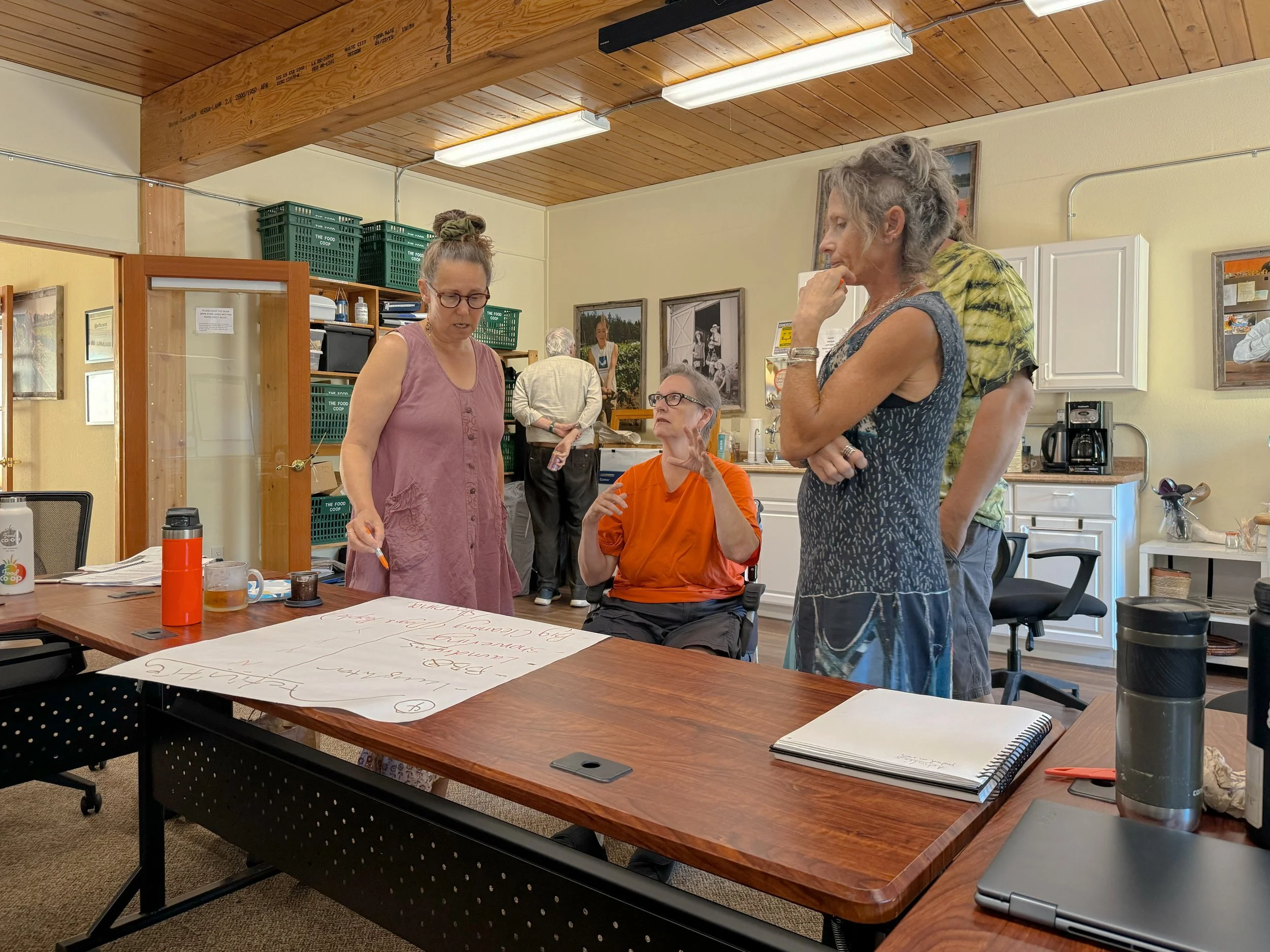
The Common House Programming Workshop establishes the goals and priorities for theCommon House, often the least understood aspect of a cohousing community.We work closely with the group to define the goals of the common house and then the specific activities to take place there. We define the design criteria for each individual space. The purpose of programming is not to design the common house, but rather to establish specific agreed-upon guidelines and criteria that will be drawn upon later as the basis for the design. Included in the workshop is the complete write-up of all decisions on which the group has reached consensus; this is somewhere around 500 decisions.
Following the programming workshop, we will develop the schematic floor plans and elevations for the Common House, based on the program, submit them to the group, and amend them once as directed, creating plans that accurately reflect the group’s decisions.
These are the kinds of things we look at during the two-day Common House Programming Workshop:
• Goals, activities, and defined spaces for the common house
• Types of activities to occur: common dinners per week, cooking, music, talking, dancing, etc.
• Ways to bring people together; places to gather
• Sustainability
• Places for people of every age
• Beauty
We draw on our experience to explain the pros and cons of all the possibilities. We conclude with a schematic Common House design that can be turned into construction documents.
Private House Programming and Schematic Design Workshop
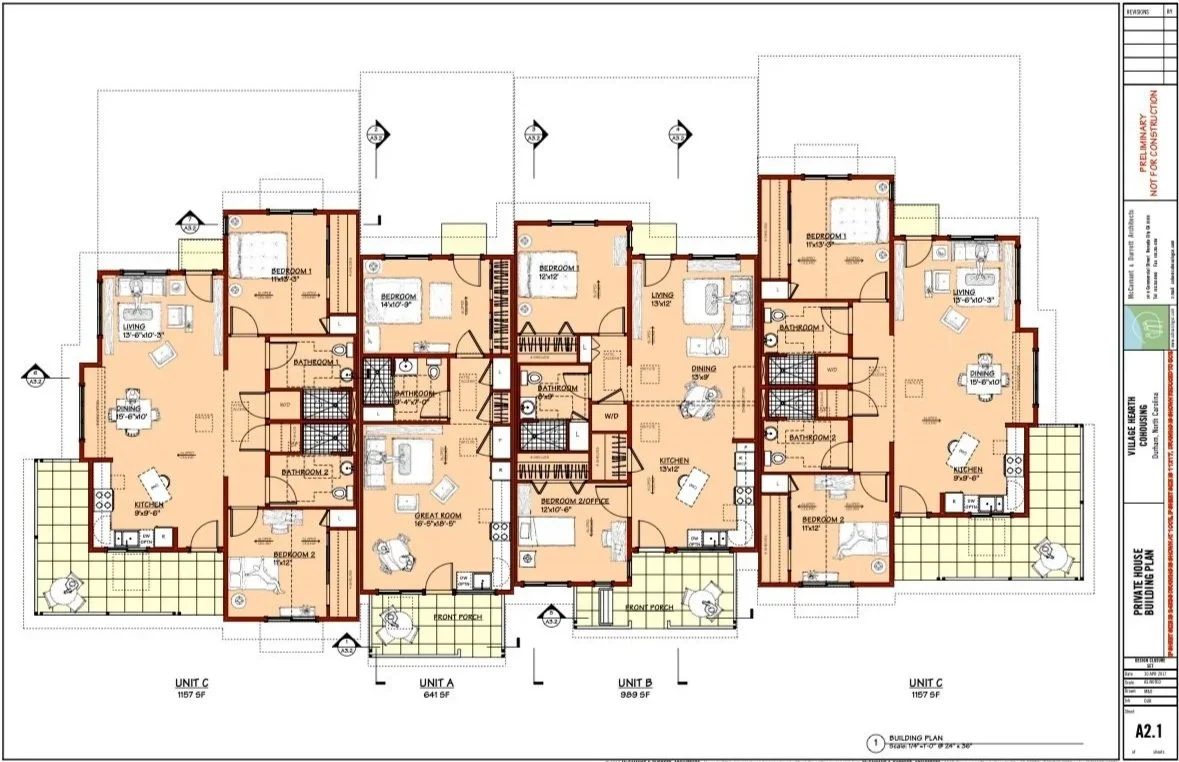
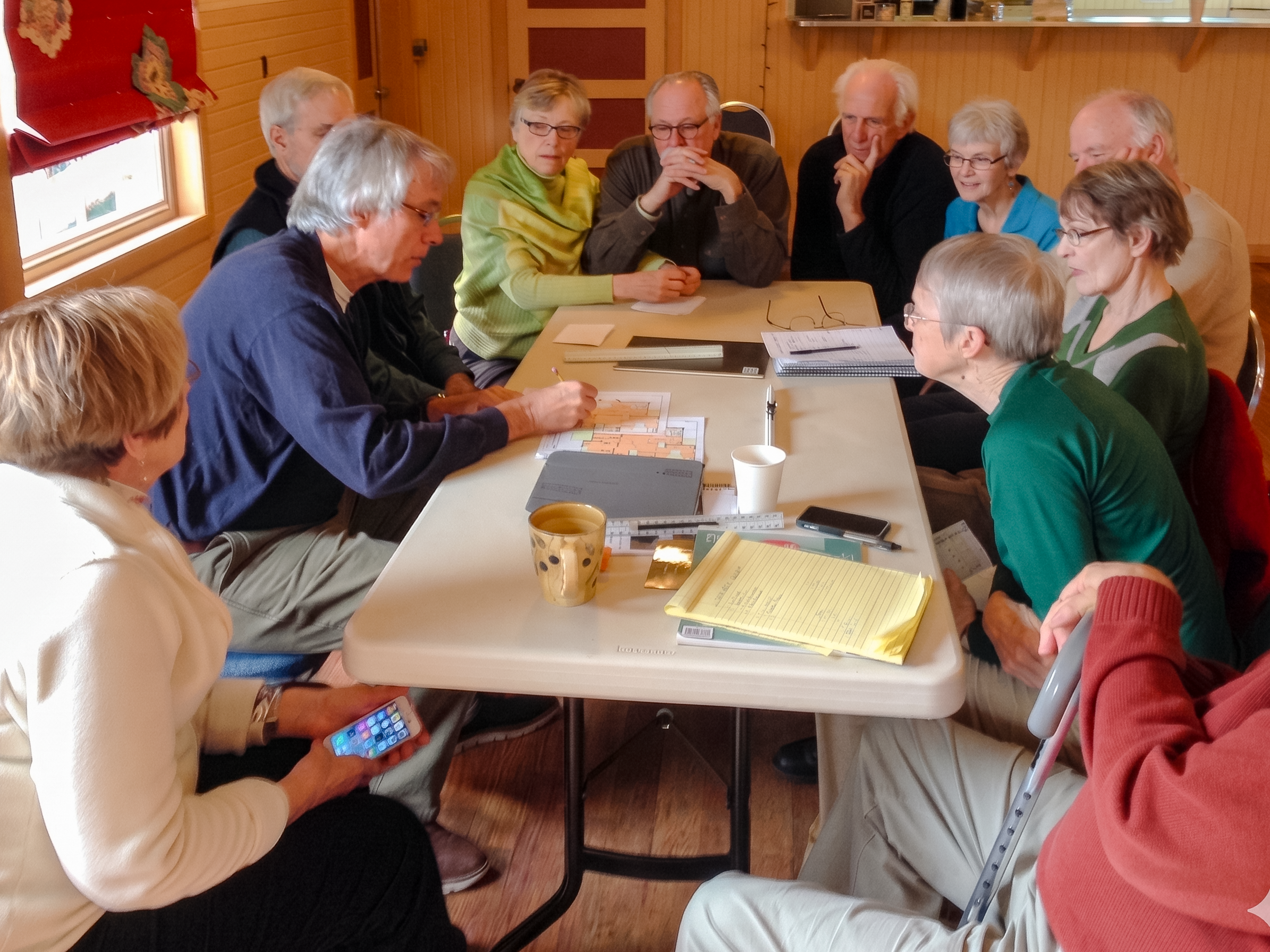
In the Private House Programming Workshop, The Cohousing Company will meet with the group to start and finish the private house sizes, types, budget, energy usage, and room-by-room requirements. The group’s desires are translated into an architectural reality. The Cohousing Company will work out preliminary floor plans and meet with households to review plans and decide upon revisions. Our goal is to create the highest value home that meets the group’s goals and budget for their houses.
In this three-day Private House Workshop we will work through building floor plans, sections, and elevations to determine space dimensions, areas, and volumes, as well as sketches and site plans showing circulation, uses, and relationships of spaces.
• Affordability
• Low maintenance
• Sustainability
• Accessibility–ADA and beyond–for aging in place, ease of visiting neighbors
• Solar design, Storage
• Privacy
• interior and exterior
We end with creating a list of goals, activities, and spaces for the private houses to set us up for success going into the next workshop. The final product is 4–6 house plans that can be turned into construction documents.
Schematic Design Closure Workshop
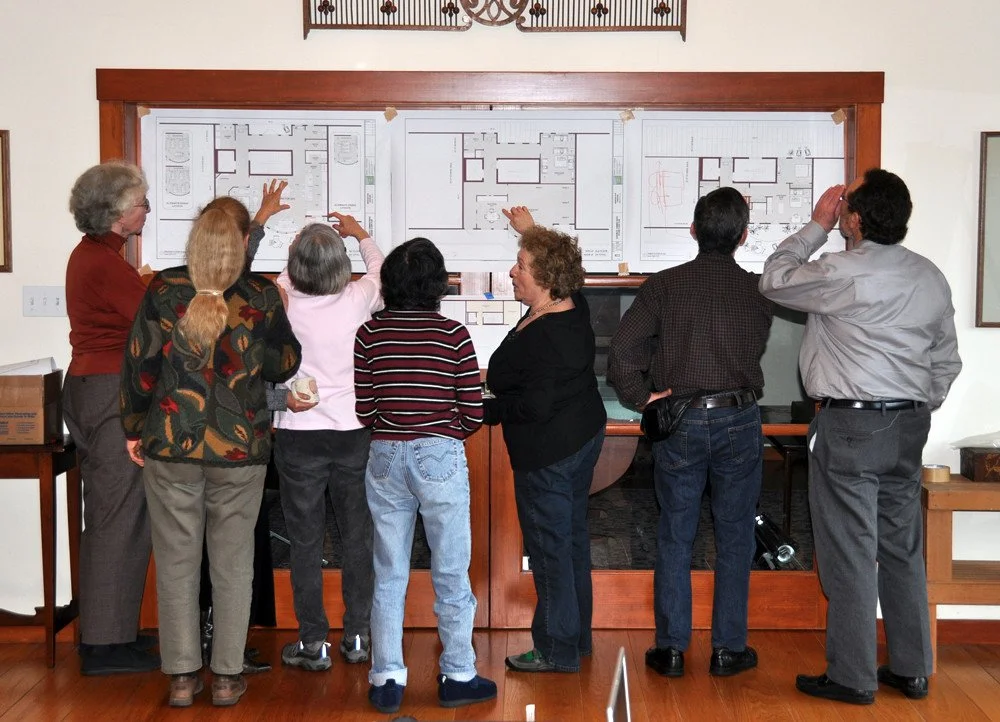
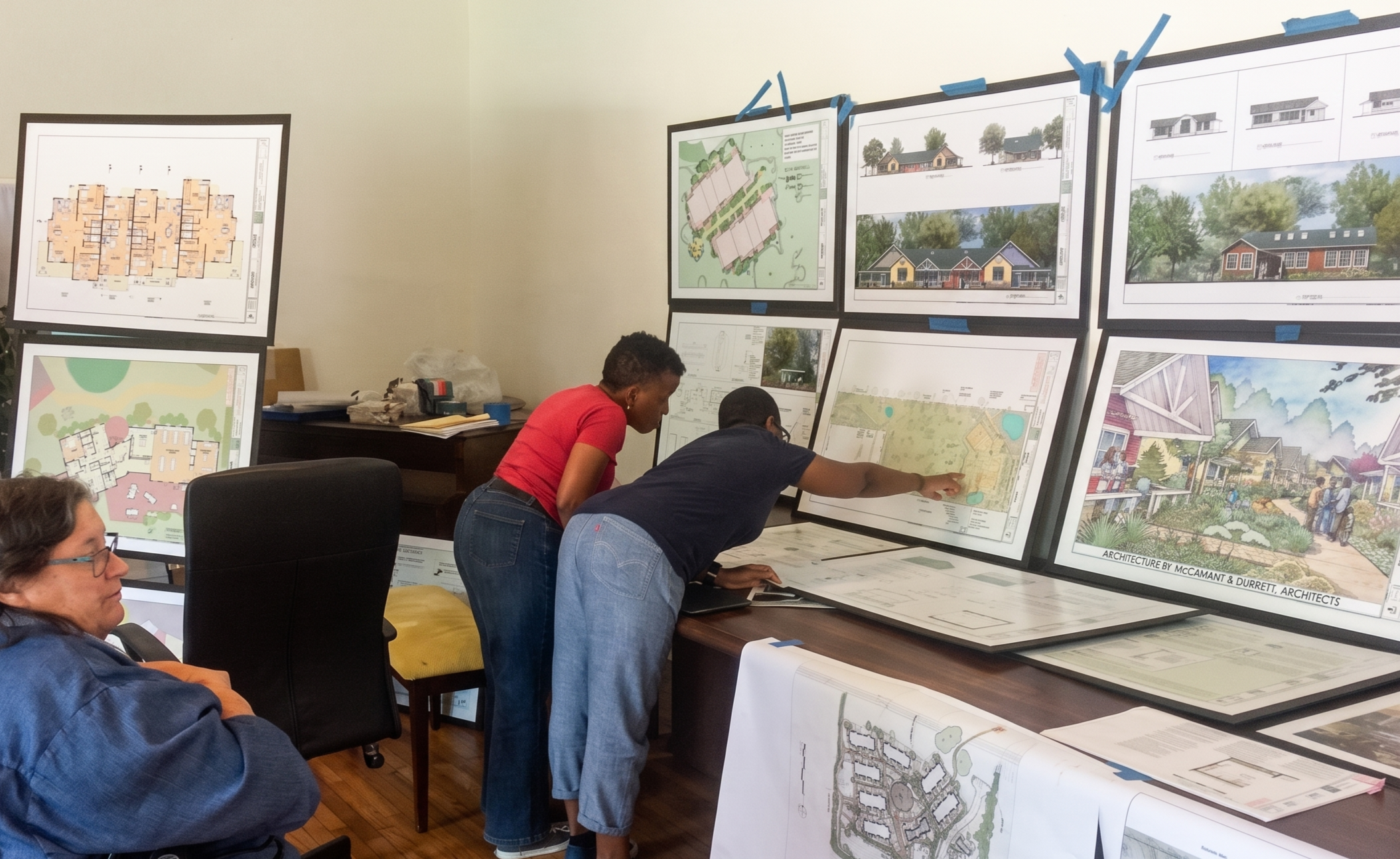
This workshop is where we present and explain the final schematic design to the group. We have located the buildings on the site, and adjusted the site plan accordingly. We present drawings for the building elevations that include proposed materials, front and rear porches, color schemes, and key design details for approval.
The goal of this workshop is to bring closure to the schematic design. After this step, the decisions made will not be revisited unless an outside source requires a change.
We look at material choices, landscape concepts, Code research and coordination with regulating agencies, Preliminary structural, mechanical and civil approach.
Most importantly, how any new information has affected the final design.
The final result is all of the design drawings necessary to go to the authorities for approvals and to start the base sheets for all of the professionals involved in the Design Development and construction documents.
Design Development Workshop
Workshop 5
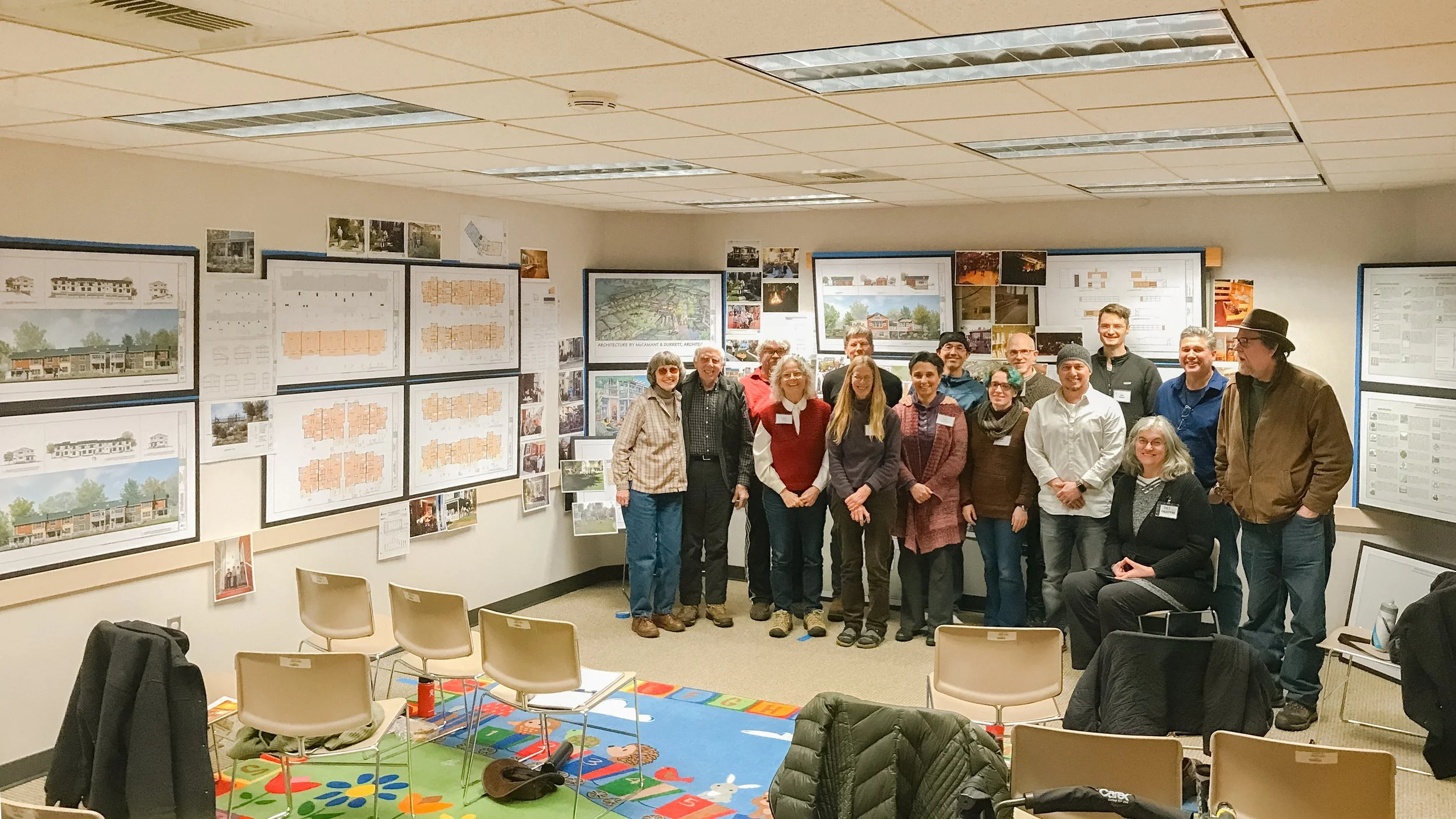
Based on an approved Schematic Design, Design Development is the process of refining and fixing the design, and working out all the details, including the selection of materials and the engineering systems. The aim of the Design Development Workshop is to finalize material design decisions before proceeding withConstruction Documents—the more detailed and expensive documents, which the city needs for project approval, and that the contractor will need to complete the project. A more detailed cost estimate may also be provided at this phase. The Design Development package will be reviewed and approved with the group before proceeding further with the project.
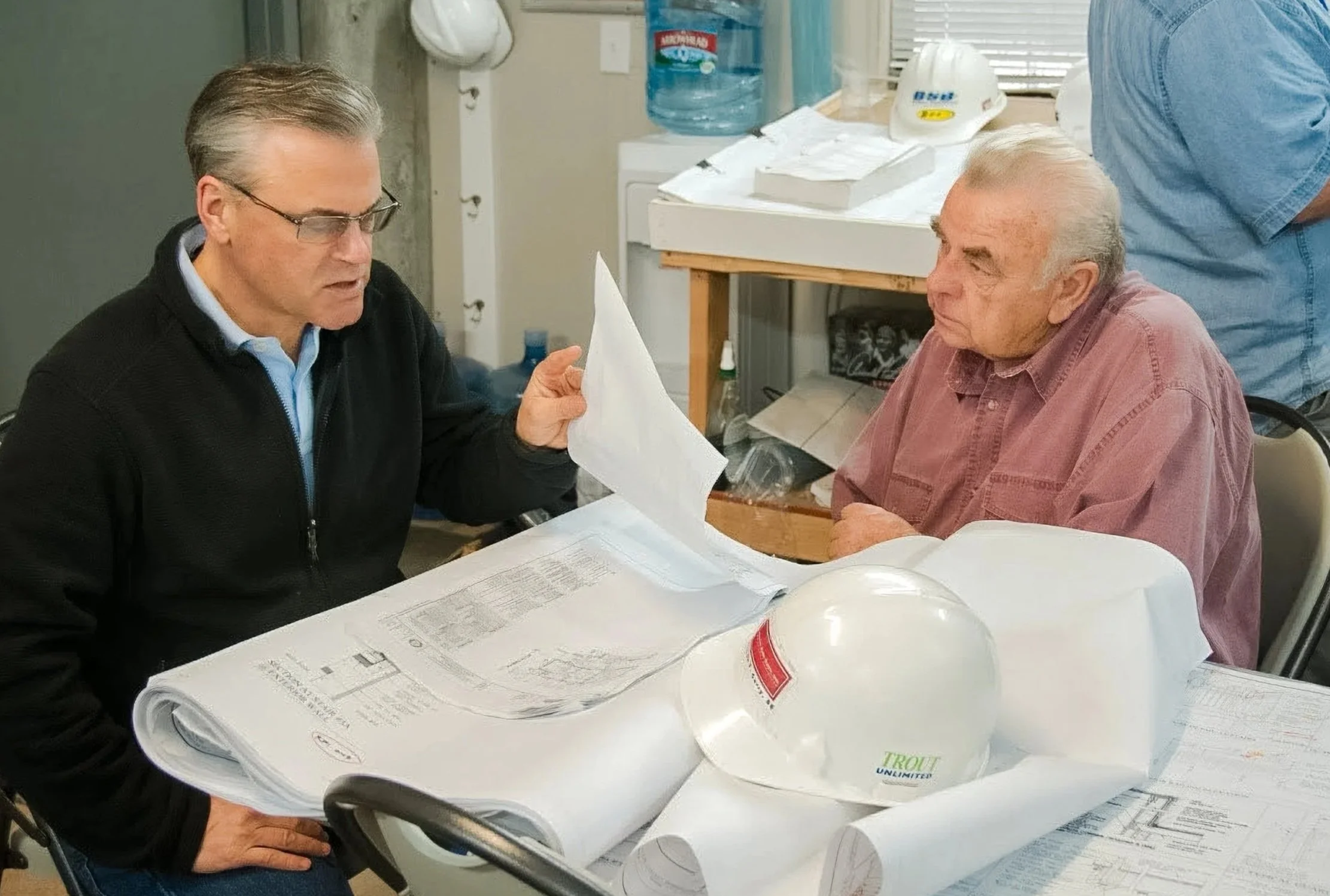
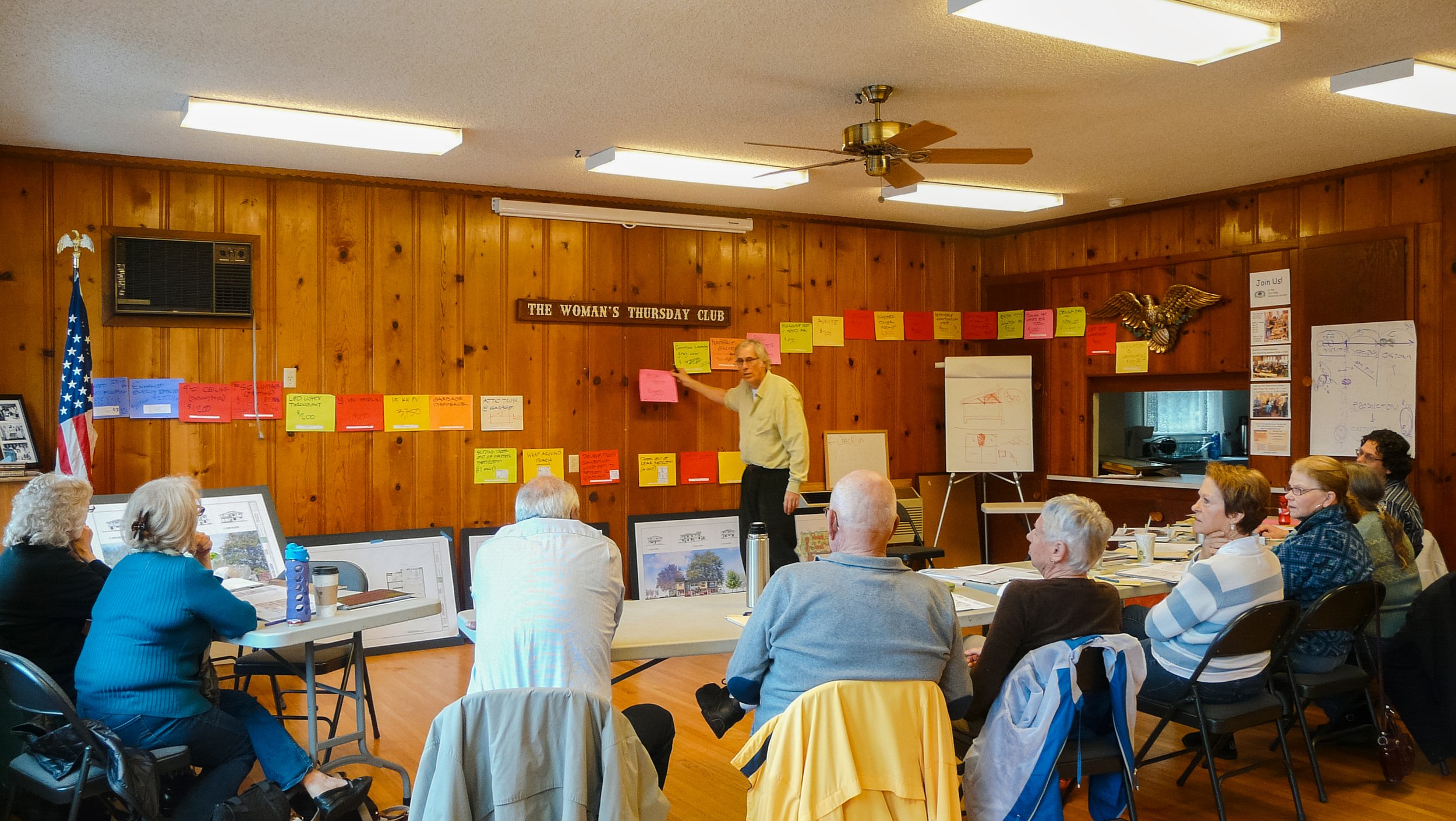
This 5-hour workshop goes through every proposed line item: why each one works best and fits your budget for the standard. First, we will discuss the process for the group to change those “standards,” if they want to do so. Then, we will explain the process to individualize houses, to customize each one.
Design Prioritization Workshop
Workshop 6
This 5-hour workshop with the group is where we prioritize the proposed amenities and the budget. Of course, there will be standard amenities provided in every home, but it is in the Prioritization Workshop where we determine what those are: which will be options and which will be private customizations. We begin with a detailed preparation for the workshop and follow-up priorities list. Workshop 6 results in a first draft of options, amenities, and later improvements.
The Construction Process
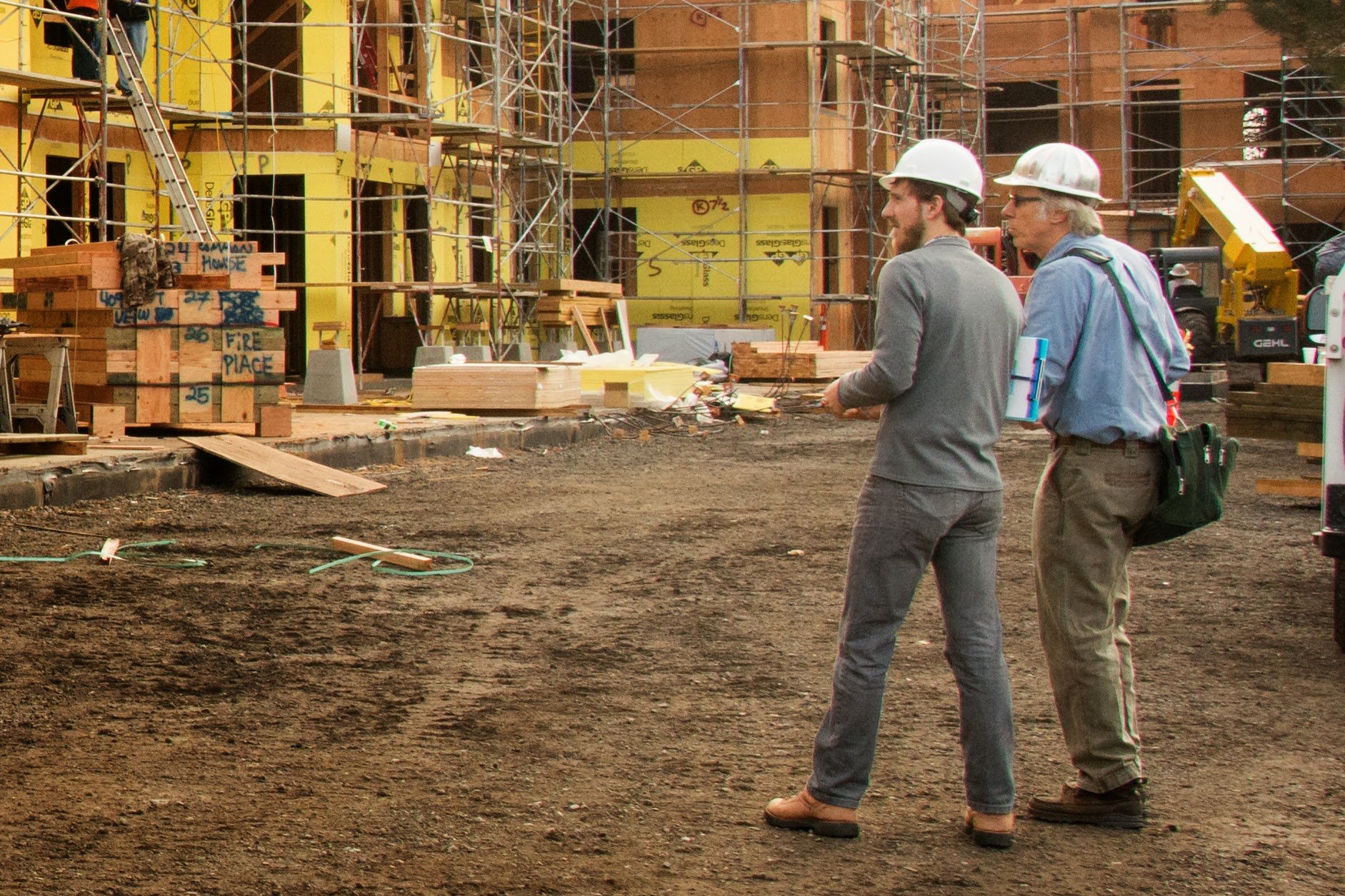
Construction Documents & Administration
Every cohousing project is unique, and the consultation services we provide are tailored to the specific goals, opportunities, and challenges of each development. Please contact us to discuss your project and learn more about how we can best serve to your consultation needs.
After Move-In
Happily Ever Aftering Workshop
HEAiC Workshop
During the three sessions that comprise the HEAiC Workshop, we help the group clarify expectations and establish pre-occupation agreements that would set them up for success socially as a community.
This workshop can happen during construction and is fundamentally established to answer the question, "If it doesn't work socially—why bother?" Too many cohousing communities have failed socially in North America. This happens when early agreements, well before move-in, are not in place. Subsequent projects can profit from these initial failures that Alison describes, and while we know not to repeat previous mistakes, we actually don't know how to avoid them, and that is the purpose of this workshop. If we follow and build upon the success of others, we clear the road ahead; we set ourselves, our neighbors, and the whole community up for long-term success and enjoyment.
This single day workshop stems from over 30 years of researching, designing, and living in cohousing—but most of all, from examining the patterns associated with high-functioning cohousing communities. That translates to the nuts and bolts of what makes it possible to set a community up for success.
Each session addresses one of the three main elements that make up the foundation of a streamlining system in a community:
Management
Meals
Maintenance