
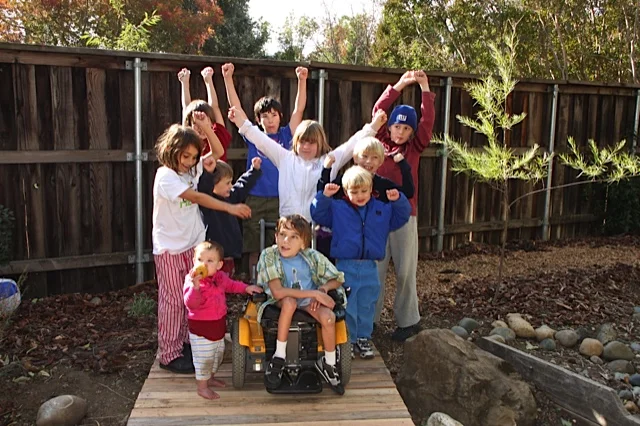
Growing Up in Cohousing
Lindy Sexton sat down with Joy Castro-Wehr in 2016, who was at the time a senior in high school and lived in Nevada City Cohousing with her family. She is a social activist and a worldly-thinker, and contributes much of this to living in cohousing.

Frog Song Cohousing in Cotati, CA. Architecture by The Cohousing Company
Lindy: How long have you lived in cohousing?
Joy: Since I was 8. My family was aware of cohousing and had a cohousing-esque relationship with neighbors in Oakland; we took down the property fence, had a common space, and shared things. We moved to Nevada City when I was 4 because of public Waldorf school. And lived on a large property in Nevada City. When we moved into cohousing, I initially missed my big backyard, but soon realized that I used the cohousing acreage behind the houses much more than my old backyard because I had more friends to share it with.
Lindy: What do you like about living in cohousing?
Joy: In cohousing, I am so filled with love, there is no room for anything else. Challenges do exist, but it is easier to deal with these challenges because of support from cohousers. Just as my neighbors have influenced me with their worldly perspectives, they also have taught me how to have opinions and ways to voice those so others aren’t offended. Most people living in cohousing are there because they share the same interest in and desire to contribute to community. Otherwise, why live in cohousing? Relationship building is much easier because of proximity in cohousing. It’s a lot less work to say “hi” because my neighbors are right across the sidewalk.
Lindy: How do you contribute to the community in your cohousing?
Joy: Every person in the community has an aspect of cohousing that they connect through. For some, it’s gardening. For others, it’s going on skiing trips with neighbors. The dinner table is my family’s “place of connection”. So common meals are how we become close to others around us. In fact, just the other night, I had a deep and inspiring conversation with some neighbors at a common meal.
I also know that the kids look up to me. I babysit for many of my neighbors and know the kids in my neighborhood like they were family. I am accountable for how I act around the three-year old that lives next to me, which is one of the reason’s I choose not to do drugs and get drunk.
Lindy: Do you still experience challenges outside of your community, for instance, peer pressure at school?
Joy: (sigh) Outside of our cohousing community, I deal with the same peer pressure that all teens deal with. Because of my family and cohousing, I feel that I am not missing anything in my life. I’ve learned to ignore the peer pressure I know is not good. I simply do not have time to pursue something that alters my sense of being.
I never needed to look beyond my community because there was always someone, some experience to fill the gap. People often get pressured into drugs and abuse alcohol because they are “lacking” in something. It’s like Play-Doh, filling holes in someone’s life, and Play-Doh doesn’t last for long. Cohousing fills in some of those holes. And community is more resilient.
That said, cohousers like to have social time and have parties. There is a group of cohousers that like to brew beer in our cohousing. They get together and play pool and try their new brews. And every once in awhile, someone will bring a nice bottle of wine to a common meal and shares it with others. Treating alcohol like a social treat, rather than a crutch teaches kids that it’s okay to appreciate every once in awhile.

Nevada City Cohousing in Nevada City, CA. Architecture by The Cohousing Company
Lindy: Why has cohousing made such an impact on your life?
Joy: I treat many of them like my own grandparents and relatives, but it’s a lot less work to say “hi” because they’re right across the sidewalk. This also means that I have gotten so many different perspectives on life – politics, culture, family, etc. Rather than believing everything my parents’ believed, I had other people to draw experiences from. I was surrounded by different perspectives of people who respected each other’s opinions.
Thanks to Joy for her insight in the abundance of cohousing! If you or someone you know has been influenced by cohousing and you’d like to share it with us, please let us know!
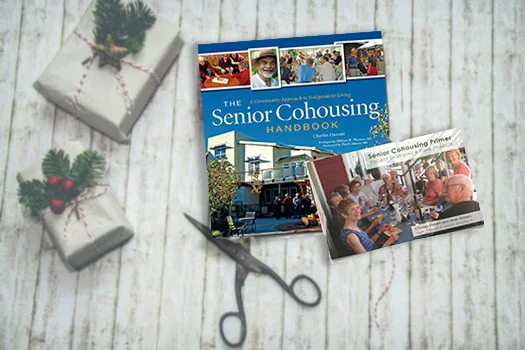
Give the Gift of Cohousing for the Holidays!

Look no further for your gift giving this holiday season! The Senior Cohousing Handbook: A Community Approach to Independent Living is a classic cohousing book and is used worldwide as a guide to getting senior cohousing projects started and sustaining them for decades to come. Senior Cohousing Primer: Recent Examples and New Projects is a perfect companion to The Handbook, giving folks an easy to understand look at the senior cohousing movement today. Together, these books are the first step to getting a senior cohousing project started in your area.
For a limited time, MDA will gift wrap the books for you, signed by Chuck Durrett, and drop ship them to your loved one’s upon request! This offer extends through Dec 17 and is valid in the U.S. only. Please contact Holly at MDA.admin@cohousingco.com to place your order if you live outside of the U.S.
This is a Hot Topic
Written by Charles Durrett
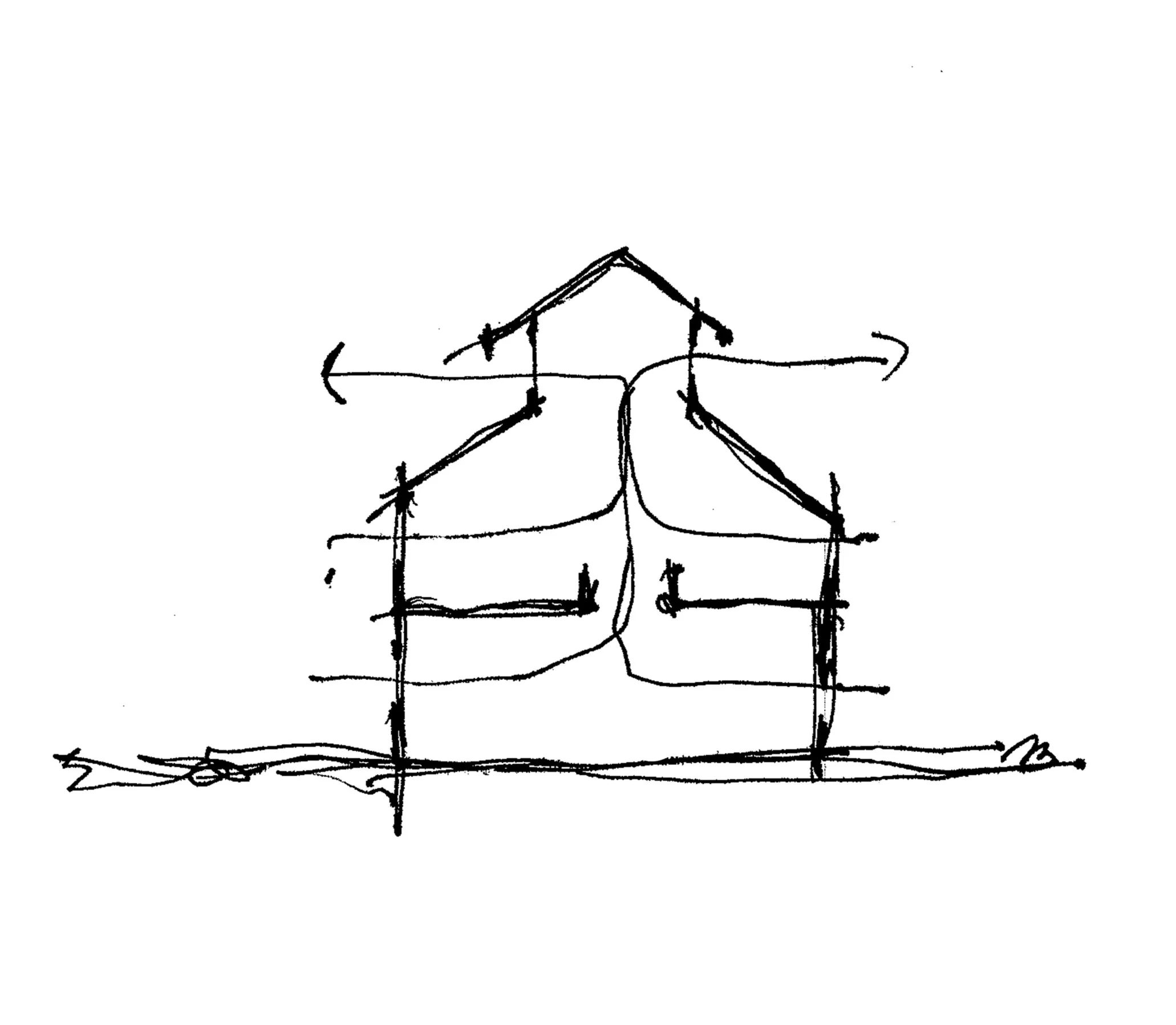
I know for a fact that if you have to have air conditioning, you have to have it—it’s a cultural thing. It’s our habit or as cultural anthropologist Robert Bellah puts it, it’s a “Habit of the Heart”, and if your house is designed poorly, it’s physiological. So, I’m not going to try to talk anyone out of air conditioning, we’ll do air conditioning if the group wants it—but I’m happy to report that most groups that don’t really need it have chosen to not have it installed and challenge us to accomplish cool houses through passive cooling (inherent in the building) which we embrace.
Time magazine just reported that air conditioning has become the number one cause of global warming world-wide, greater than transportation, greater than house warming, greater than industry. Ironically, of the 2.8 billion people along the equator, those that need it the most, only 8% have air conditioning. The rest of us, in the U.S. and Japan, for example—about 90% have it. The good news is that cohousing groups get to create their own houses and therefore respond to their own priorities. That’s why those houses perform so well from a passive cooling point of view.
We, for example, make sure to use enough mass so that if the night temperature gets down to 70 degrees Fahrenheit the house gets to 71 degrees Fahrenheit or 72 degrees Fahrenheit by morning and that the high temperatures of the day, even when it’s 100 degrees Fahrenheit outside the interior of the house doesn’t get above 76 degrees Fahrenheit in the late afternoon.
There are hundreds of tricks to achieve passive cooling and we employ them all, because of all the clients that we work with, no one wants to walk their eco talk more than cohousers—to a point. In other words, it has to work. And if it doesn’t then there has to be a back-up like an entirely interior A.C. that you can put in your bedroom at night but keeps the white noise (a hum) internal to the house so that neighbors can simply keep their windows open (and uses less than 10% as much energy.)
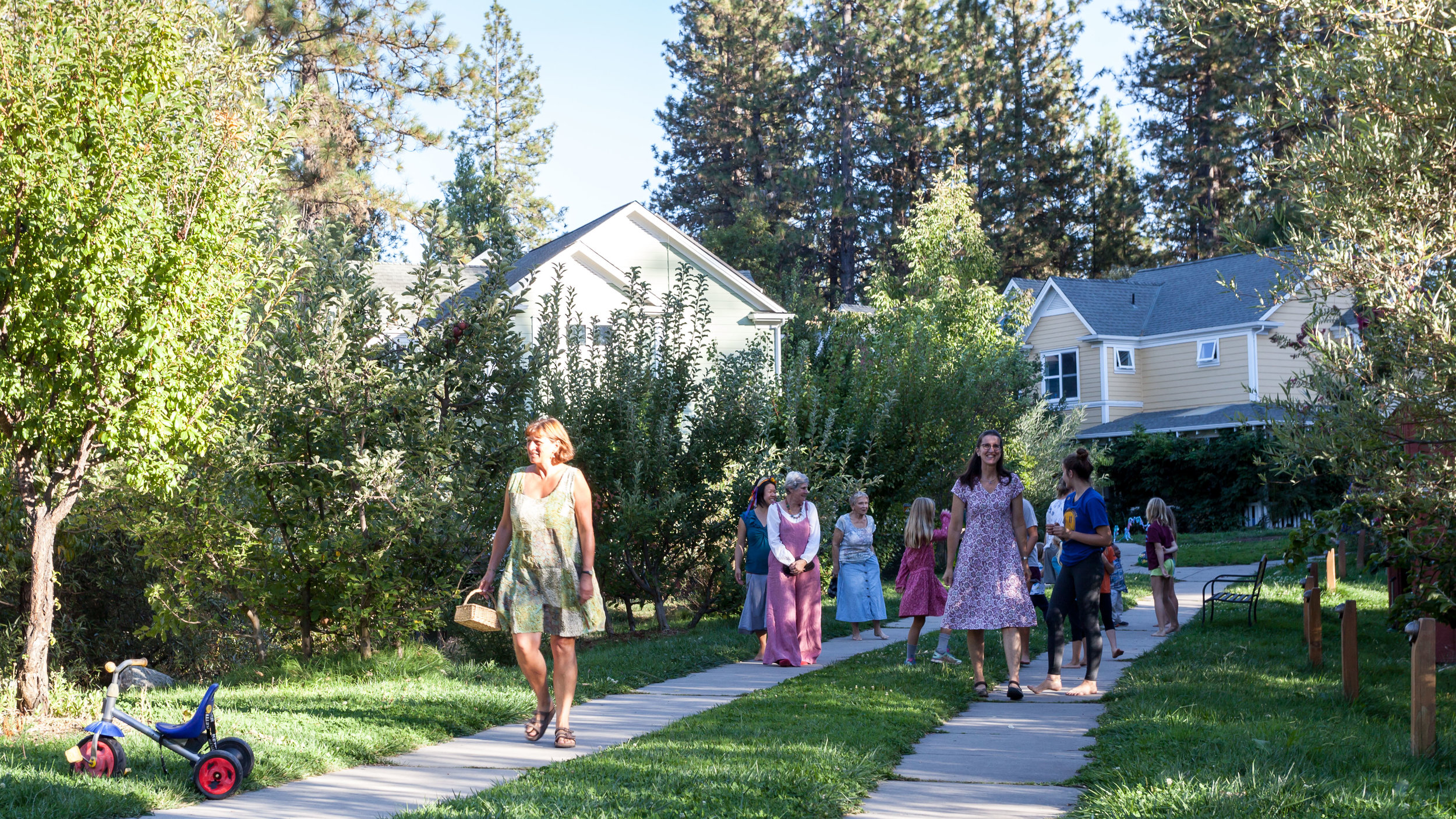
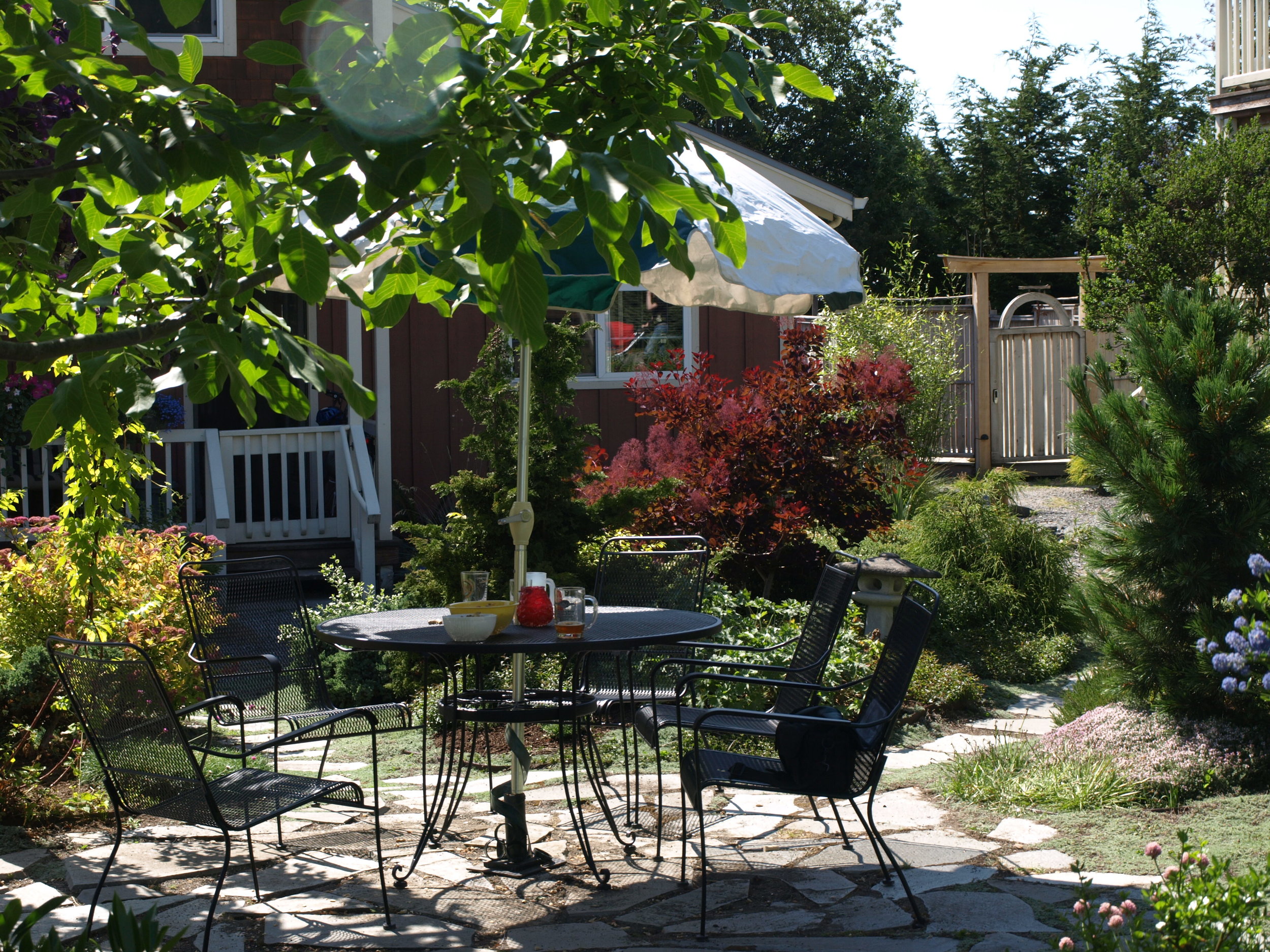
Examples of passive cooling include sparse pavement/more lawn, shaded gathering nodes, shade trees, and porches with well-designed overhangs. All of these contribute to a more enjoyable experience in one's private home and the common space.
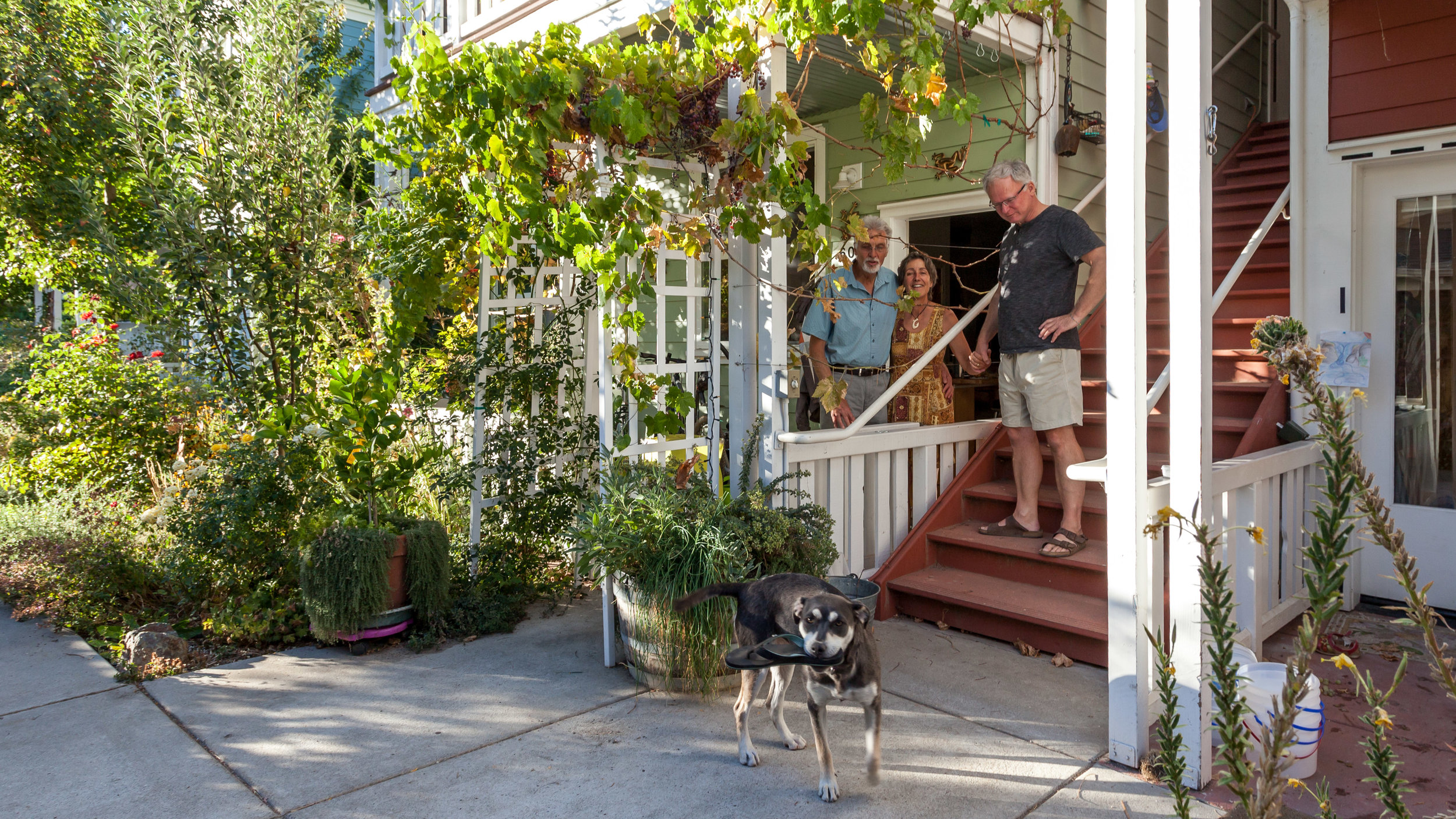
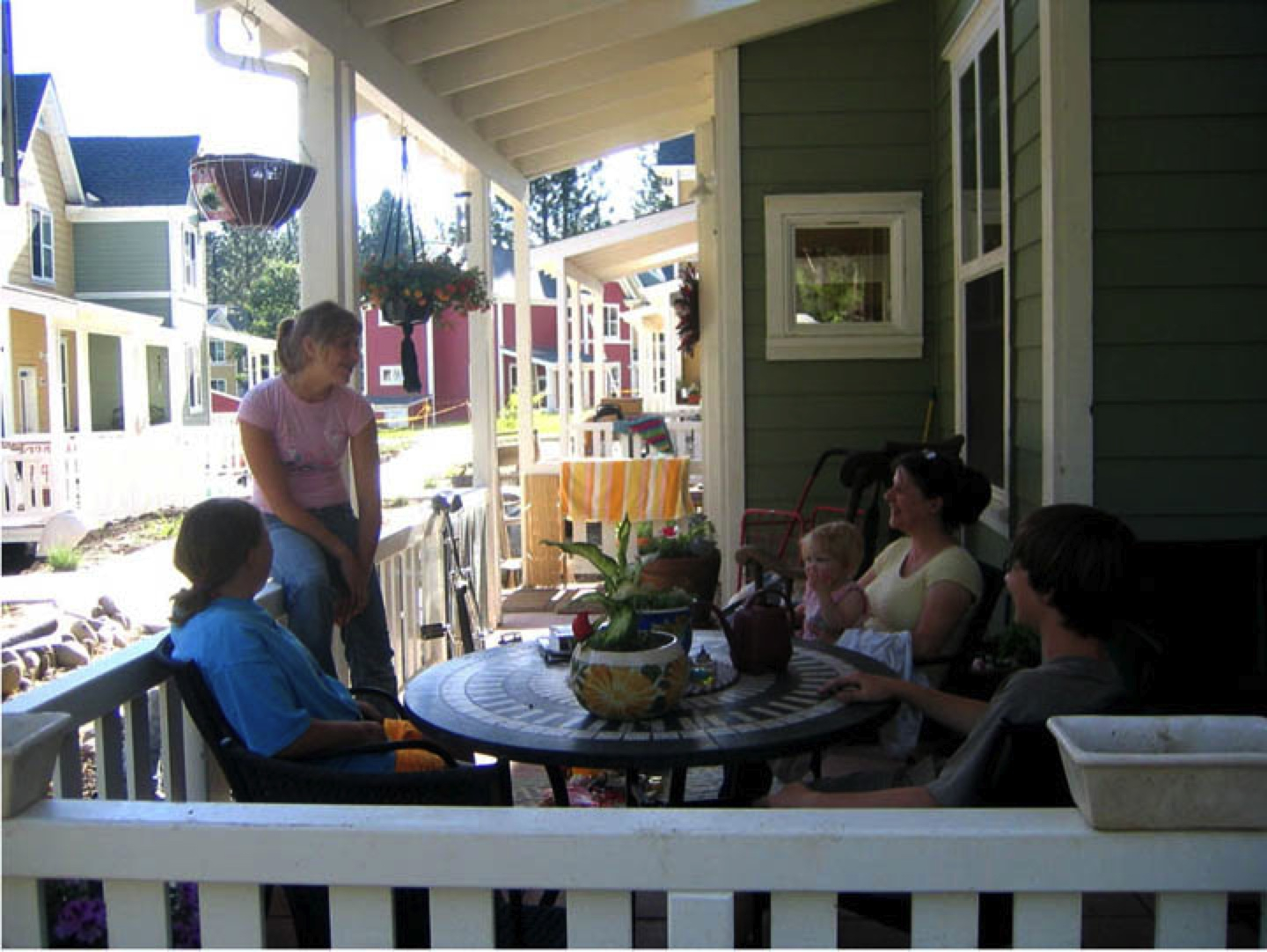
To give you some idea of how cultural it is, we rented a house while our current state-of-the-art, passively cooled cohousing was being built. We didn’t turn on the air conditioning until our daughters 15th birthday party on August 2nd. A dozen 14, 15, and 16-year old young ladies showed, so, we turned on the air conditioning. Jessie, our daughter, said “Hey, I didn’t know we had an air conditioner”, the air conditioner went on every day after that, although she never complained about the heat before. It’s so easy to flip a switch. Before that we’d sit on the front porch in the evening, and let the rocking motion create a breeze, or the porch ceiling fan cooled us, amongst other things like a glass of iced tea.
I’ve yet to read an essay or any rationalization as to why it’s ok to cool our house to warm the planet. Invariably someone will invoke the plight of the Bangladesh people and them standing in waist-high water in the downtown streets after a routine storm. And, of course, the more the planet warms, the more that happens and the more we need A.C. And it’s not just Bangladesh, it could be Quebec, where more than 70 heat related deaths have occurred this summer.

Our cohousing 34 houses were built with zero air conditioning (in a part of California where nothing is built without air conditioning). But it’s not just a conscious design decision it is a series of conscious life style issues. Passive cooling comes up at least once a week at common dinner in the summer. When do I close my windows? When do I close the shades? Which window shades? When do I turn on the whole house fan? For how long? When do I use the ceiling fan (whenever you’re in the room)? When do I turn it off (whenever you’re not in the room)? Yes, it’s a topic, an easy one, which gets you in touch with your neighbor and your climate. We do have air conditioning in the common house, and once (in 12 years) 21 folks spent the day there. This was the year that a heat wave killed 35 Californians (2/3 of whom had air conditioning but were too fried to turn it on). I know that it could possibly cramp your style to work and play in the common house for one day out of 12 years—but not if you can imagine what the rest of the world is giving up to make A.C. so convenient for us.
I find that you can’t be righteous about this stuff, but that you don’t have to be. When you watch cohousing groups work this stuff out, you believe that they are willing to imagine that it can be worked out and that’s the beginning of getting the job done.

Indirect lighting, efficient insulation, high ceilings, and an open floor plan contribute to passive cooling in the Common House.
In some cases, groups don’t want to take the risk and put in a mini-split or similar, but I’m happy to report that many folks, like some in Fresno, California, say that they still haven’t used their air conditioning in ten years. A.C. is an increasing problem, but I love working with people who want to be at least part of the solution.

Large efficient windows let light in without heating the space.
If we can’t get cohousers to scale back their air conditioning usage then we’re toast! But my experience is that we can.
Design process critical in creating cohousing communities, says American architect

Comment from Chuck:
I want to be very clear about this article. Although I believe that the full measure of cohousing is accomplished best by virtue of real authentic participation, community in all of its incarnations is the step that we need to be headed in. The true legacy of cohousing will be all that it inspires in the way of making better neighborhoods . I'm sure that Our Urban Village will be a successful project.
Thanks,
Chuck
Published in Vancouver Courier July 22, 2018
Written by Naoibh O'Connor
The American architect who came up with the word “cohousing” is questioning the Vancouver-born version of the concept dubbed “cohousing lite.”
“I don’t want it to be called cohousing, for one thing. Since I coined the word, I don’t want it to get adulterated,” Charles Durrett told the Courier. “They can call it cohousing-inspired or whatever, but I’d rather they call it something else altogether because as soon as you call it cohousing-inspired or cohousing lite, then it gets truncated to cohousing and then you end up with more not truth in advertising.”
In the traditional form of cohousing, which is a collaborative style of living, a group of like-minded people find and buy land, work together to design a development, and steer the project through the complicated rezoning and construction process.
Cohousing developments feature individual units that members purchase, as well as large, shared indoor and outdoor spaces. Residents hold regular communal meals, make decisions by consensus and have responsibilities around the building. Fostering social relationships throughout the process, from the design to the live-in stage, and making sure the architectural design encourages interaction, are key elements, Durrett said.
Vancouver’s first cohousing complex, which he helped design, opened in East Vancouver 2016, while another one in Riley Park is expected to open in 2019.
On July 17, Vancouver council approved rezoning for the first project in the city that the founders describe as “cohousing lite.”
Cohousing lite
The plan is to build a 12-unit, three-and-a-half-storey complex with about 2,000 square feet of common space on a site on Main Street at Ontario Place. Our Urban Village, the group behind the project, formed in 2015 and currently includes eight member households. They dreamed up the “lite” version of the concept in an attempt to streamline and speed up the process by having a developer — in this case Tomo Spaces Inc. — take on the development details, the approval process and construction plans.
Our Urban Village picked Tomo, which stands for “together more,” as the developer because members see the firm as socially progressive.
Although Tomo has control over the design and plans for the building, there was some consultation. During the design phase, Tomo held occasional workshops with group members on key matters such as anticipated uses for the common space.
Our Urban Village also formed a site and design committee to give input as requested, and group members have met regularly for social and planning events to help gel the community. Their main requests for their complex were that it feature open-concept units, lots of natural light and nine-foot ceilings.
While Tomo owns the land, Our Urban Village will take over ownership once the building is finished and function like a traditional cohousing complex.
Part of the rationale behind their decision to modify cohousing was that some cohousing groups fall apart before a project is realized because it involves a years-long commitment, a complicated development process and, in Vancouver’s case, finding land in an expensive market.
But Durrett maintains skipping any part of the process won’t yield proper results. He doesn’t think groups should give design control to a developer and insists all members should be personally involved from start to finish.
“The most important component in a cohousing community is the participation in designing and developing a project,” he said. “Basically, groups of people will take risks that no developer will ever take.”
Durrett also said the hands-on process will weed people out who aren’t meant for cohousing, help those who are committed to figure out how to get along, and it will reveal what they’ll have to deal with once they move in.
Durrett is not convinced a tweaked version of cohousing will result in a faster process, and he said dozens of cohousing lite projects would have to be completed and evaluated to prove that to be true.
“My overarching feeling is that there are no magic bullets. There’s no need to take shortcuts because they simply take longer and there’s no reason to take shortcuts because you don’t get the same value,” he said.
“It’s like saying, ‘I’m going to do organic gardening but I’m just going to use some chemicals.’ There’s too much to be gained by participation to not do it… [Shortcuts] might get a quicker result in one or two cases… It’ll never get a better result.”

Traditional cohousing
Durrett, whose firm McCamant and Durrett Architects focuses on cohousing, lives in Nevada City, California.
He brought the concept of cohousing from Europe to North America decades ago. In 1988, Durrett and Kathryn McCamant introduced the idea through the book Cohousing: A Contemporary Approach to Housing Ourselves. More recently, they published Creating Cohousing: Building Sustainable Communities.
Cohousing, Durrett explained, originated in Denmark where it’s called “Bofaelleskaber.”
“I didn’t think Bofaelleskaber was going to work well in the USA,” he said. “One day, when I was living in Denmark, the Danish government called me up and said, ‘Chuck, we’re translating an article about Bofaelleskaber tomorrow, so we need a word tomorrow’ so I spent the evening coming up with a word.”
He’s lived in three cohousing communities over the past 25 years and has been involved in helping build 55, including five in Canada. Among them is Vancouver Cohousing on East 33rd Avenue, which includes 6,200 square feet of shared space — a size that’s nearly impossible to re-produce in Vancouver these days given the high price of land.
Durrett was involved in several workshops with members of Vancouver Cohousing from which all the preliminary designs were produced. They were then handed over to a local architect who did the working drawings.
During the workshops, numerous details, such as reducing the number of parking places, were nailed down.
Durrett maintains the design details that are developed and the relationships that are formed through a hands-on process with the entire cohousing group helps create the foundation for, and the culture for, how the complex will function once everyone moves in. That includes how residents get along and how much time is spent in shared spaces, especially after the honeymoon phase wears off.
“My cohousing community has about 450 people-hours a week and I’m sure it’s pretty similar in Vancouver Cohousing because it was a very hands-on design,” he said. “Even a badly designed cohousing has about 100 people-hours and in non-cohousing [development] it’s 50 people hours a week,” he said.
The night before speaking to the Courier, Durrett said his cohousing complex held a dinner with about 50 members in attendance, followed by a game night and music in the common house, after which people played pool until midnight.
“There’s a real heartbeat there and it’s partially because all these people knew each other quite well when they moved in. They’re a community when they move in. That’s the big difference — what participation brings to the table. One of the many big differences,” he said.
Durrett doesn’t believe a design committee is as effective. He also suspects it would take longer because of the back-and-forth.
“It just adds another step — the notion you’re going to take the whole group’s concerns, give it to a design committee and they’re going to translate it. Because when they translate it, they’re going to have forgotten some stuff. Anyway, I’m very curious to see how it turns out,” he said.
Durrett also thinks the idea comes from a place of mistrust based on a perception that involving everyone will make the process too long.
“It never works for some people in the group to think that they’re protecting the interests of others in the group. Every time that happens, it makes everything a lot more conservative…,” he said.
"Basically, you’re precluding possibilities. … You never know where the good ideas are going to come from. I can tell you, because I've designed 55 cohousing now, that that meek and mild, quiet voice in the corner, who never says anything, sometimes comes up with a watershed [idea]. They would never, ever be on the design committee because [they think they] don’t have enough confidence or [they're] not that hip to design and these other guys have been reading all the magazines and they know enough to be dangerous. But the reality is there are a lot of quiet voices that bring a lot of wisdom to the table — real values, real experiences and I want to hear from them. They get things done.”
The future
Despite his reservations, Durrett said he hopes “for the best” for cohousing lite, although he wondered how success would be measured.
In fact, Our Urban Village and the developer plan to continue their relationship beyond build-out. They’re working with the organization Happy City, led by Charles Montgomery who wrote the 2013 book Happy City, Transforming Our Lives Through Urban Design. Happy City will track how the community functions for a couple years after move-in, including interviewing members and conducting focus groups to see what’s working, what’s not working and what can be tweaked.
Durrett, meanwhile, remains concerned about how the project evolved.
“If they’re hands off, they’re not going to get what they want. The way to mold the clay is to have your hand on the clay. So we’ll see if they’re happy, semi-happy, unhappy… it’s going to be somewhere along there,” he said.
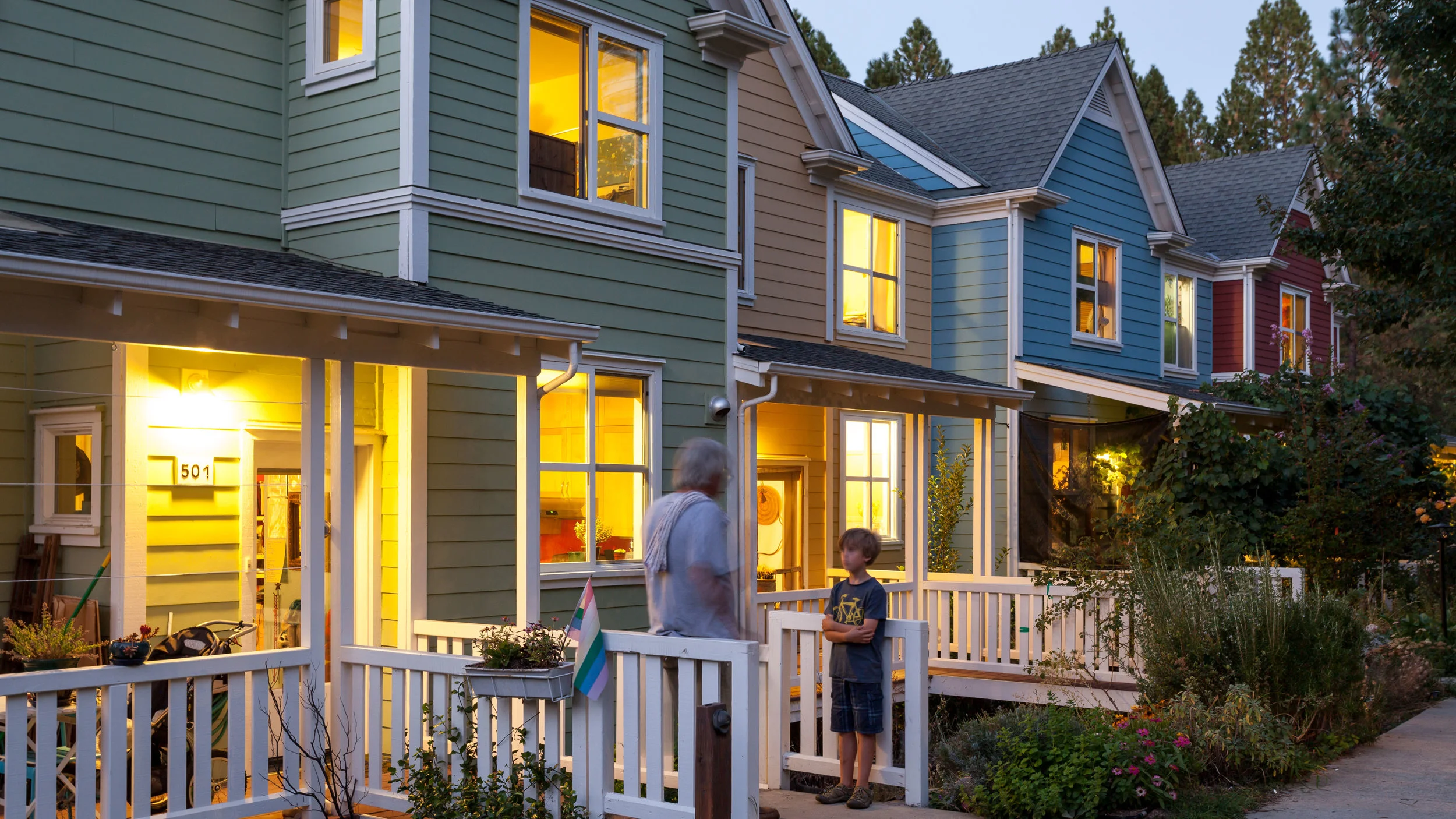
Countering the doubts about cohousing lifestyle

Published in Revelstoke Review June 15, 2018
By Barry Gerding
Cohousing is an emerging lifestyle that offers quality of life options not readily accessible from conventional urban sprawl and high density living concepts, says the architect who introduced the concept to North America.
Charles Durrett says the lives that Millennials’ parents and grandparents aspired to, such as living in a single family home, has become less realistic looking forward with the cost of housing and detrimental environmental impact of urban growth.
“I think you are beginning to see a cultural shift in how people want to live their lives. More and more people today are willing to look outside the box on how to make something work that will impact their lives in a positive way,” he said.