
Cohousing For Seniors: A Solution for Today
Charles Durrett is busy. He has been designing, teaching and building cohousing communities in the United States since he brought the concept here from Denmark with Kathryn McCamant some three decades ago, but this year things are different. “Instead of working on demonstrating the value of cohousing, our firm is occupied keeping pace with a number of communities under development. I’m also just completing a new book to help others initiate their own cohousing community.” observes, Durrett.
Cohousing is just now really hitting its stride in the United States. The US Cohousing Association reports that there are currently 165 established cohousing communities with another 140 forming. Durrett himself is working on a dozen projects in the United States and Canada in different stages of development.
Cohousing is a planned community consisting of private homes clustered around shared space. While each attached or single family home has traditional amenities, including a private kitchen, there are shared spaces that reflect each community—often with shared community kitchen, lodge house, gardens and outdoor spaces. The legal structure is typically a homeowner association or housing cooperative. The Cohousing Company (TCC) designed the first US cohousing community in Davis, California, completed in 1991.
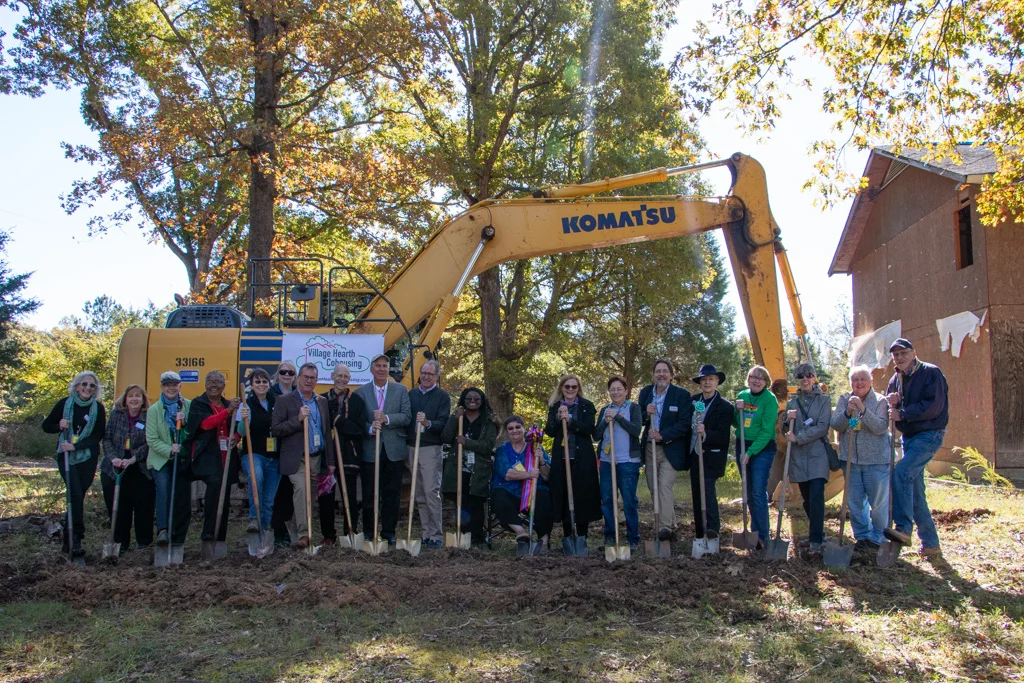
Affordable living and sustainable housing concerns are major issues confronting every age group in America today. Healthy, educated, proactive adults want to live in a social and environmentally responsible community. They also seek to maintain a quality lifestyle while stretching their dollars further into the future. Millennials looking for homes are finding traditional single family homes out of reach. Durrett is seeing family and specific populations building their own lifestyle-based housing, like LGBT Senior Cohousing in Village Hearth Cohousing in Durham, North Carolina, a community Durrett has helped initiate. This will be the first LGBT senior cohousing project in the US, and maybe anywhere.

Village Hearth Cohousing celebrated their groundbreaking. Photography by Luke Hirst.
Writer Pamela Biery caught up with Durrett and quizzed him on the “hows and whys” of 50+ cohousing.
Q: What are some of the unique characteristics of 50+ cohousing communities? A: One word: proactive. These communities are filled with individuals who are choosing to take control of their destinies through planning, not leaving things up to chance. For instance, accommodations are made for shared caregivers to live on site and long-term mobility and access issues are examined. Just the process of thinking things through as a group changes cohousing participants, preparing them with realistic views of their future. Q: What are some mature adult cohousing benefits?
A: Emotional well being, saving money through shared services and community and maintaining independence for much longer than is commonly possible. Today, more Americans live alone in their later years, a significant health concern. This is a reflection of our culture, and one that we have the power to change. New York University sociology professor Eric Klinenberg notes that social attitudes need to progress so older people can stay connected as they age.
“Our society is evolving quickly, but probably not quickly enough.”
The biggest cohousing benefit for any community is living with kindred and having a number of close friendships. But it cannot be overlooked that cohousing costs significantly less than other senior facilities and gives the longest possible independent lifestyle—good for living a full life and conserving financial resources.
Q: How does cohousing reduce an individual’s carbon footprint?
A: Cohousing takes an individual out of the single home mindset. Top of mind: better lifestyle, greener lifestyle. Seniors realize that it’s really okay to leave their ranchette and move closer to town knowing they will be living with people they are comfortable with and that they are creating a home they can easily maintain for the next 20+ years. Americans drive some 5 billion miles caring for seniors in their homes (Meals on Wheels, Whistle Stop Nurses, and so on). In our small, semi-rural county in the Sierra foothills, on-demand buses alone has made 60,000 trips in massive, lumbering, polluting vans-buses – usually carrying only one senior at a time – schlepping a couple thousand seniors total over hill and dale to doctor’s appointments, to pick up medicine, or to see friends. In our cohousing community of 21 seniors, I have never seen a single on-demand bus in the driveway. In cohousing it happens organically by caring neighbors: “Can I catch a ride with you?” or “Are you headed to the drug store?” This alternative is much more fun and inexpensive for all involved, and much less damaging to the environment. Site location that allows for walkable lifestyles is a large factor, as well. Wolf Creek Lodge, a senior cohousing community with 30 units, built on 1 acre, is within walking distance of downtown Grass Valley, population 12,000. Nevada City Cohousing is also a short stroll to the downtown historic district. Cohousing is a mind shift that is not just greener—it makes a better life.

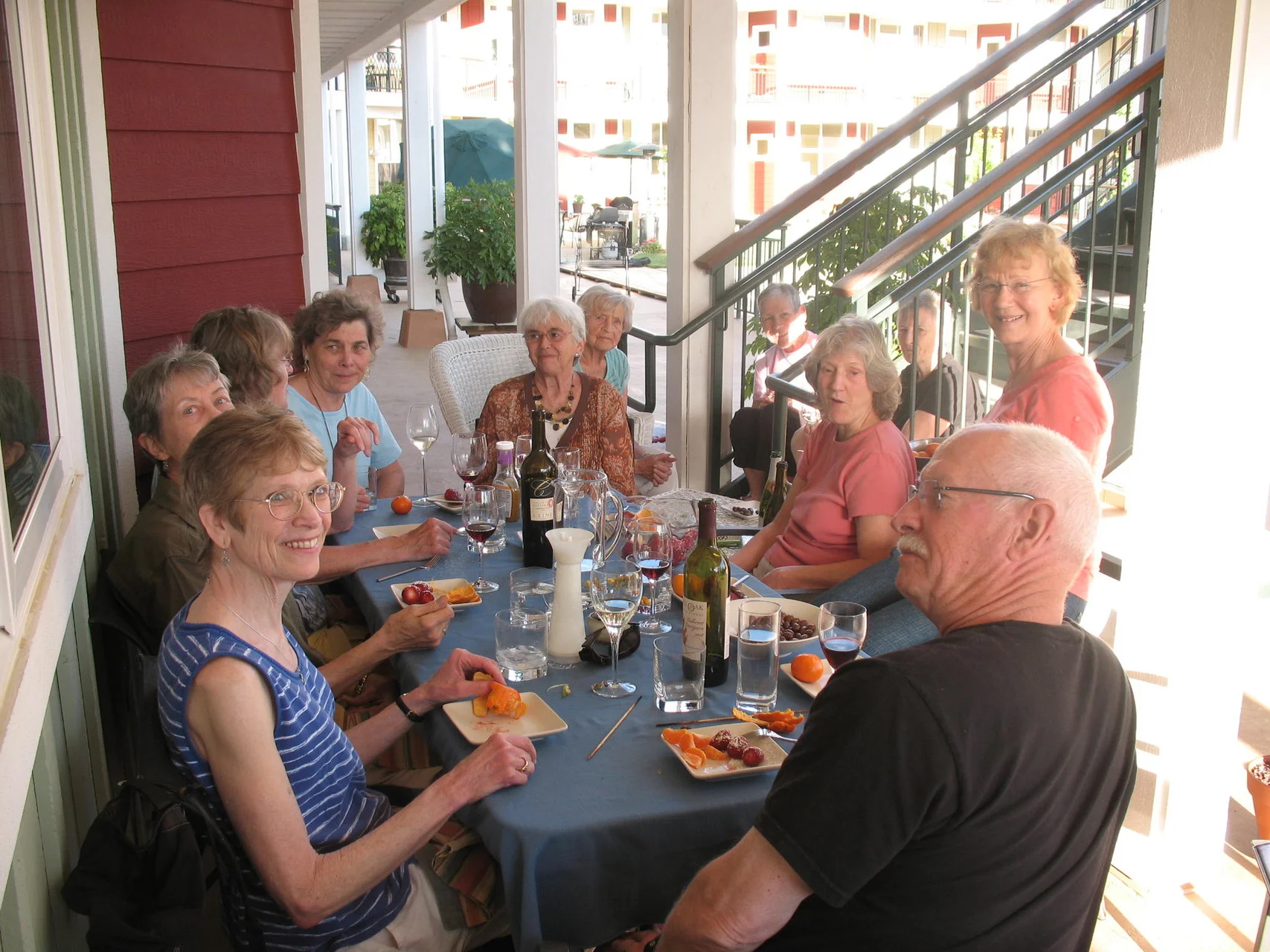
Residents at Wolf Creek Lodge celebrate birthdays with one another!
Q: How would cohousing affect my retirement planning?
A: Cohousing is a proactive, realistic way of addressing issues. It's an ultra-responsible approach to assessing how to provide for one’s own future. Everyone in the process is dealing with understanding that mortality is real and that aging successfully means examining the whole person benefits—economic, emotional and physical well being.
Cohousers choose to place themselves in a fun, life-affirming and embracing community. The big thing here is that by living independently longer, money is saved at every juncture, so by taking control, resources can go much further. Turns out that an independent, quality life costs less than facilitated retirement.
Q: What kind of start-up process is involved?
A: First off, contact a cohousing company. They will find out what considerations and requirement are needed for your specific area. They will also be able to guide you in forming a group. Next, read the book. Then start talking to friends. Host a presentation in your town, secure a site. You may already know some of your new cohousing neighbors.
—Charles Durrett
Learn More About Cohousing
Hear Charles Durrett Speak at The National Cohousing Conference May 30-June 2, 2019 at the Downtown Portland Hilton.
Watch for his new book, profiling the successful development of Quimper Village Cohousing in Port Townsend, Washington and see other cohousing books here.
Cohousing events and speaking engagements, along with news on developing communities, can be found here.
Sign up for Cohousing Co. news and occasional updates, including the new book release, with the working title, Quimper Village Cohousing: How 40 Seniors Made A New Neighborhood to Suite Their Real Needs.
Growing Up in Cohousing
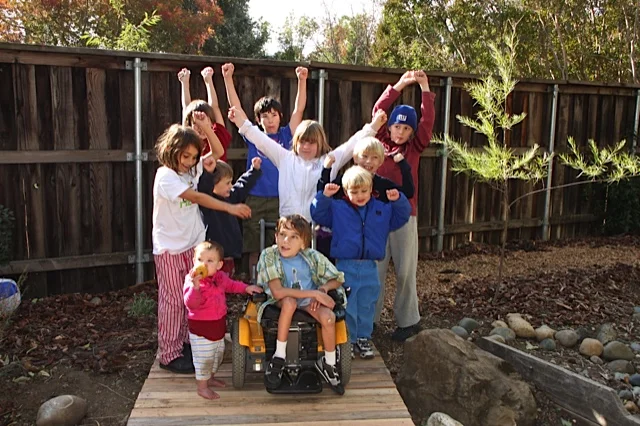
Lindy Sexton sat down with Joy Castro-Wehr in 2016, who was at the time a senior in high school and lived in Nevada City Cohousing with her family. She is a social activist and a worldly-thinker, and contributes much of this to living in cohousing.

Frog Song Cohousing in Cotati, CA. Architecture by The Cohousing Company
Lindy: How long have you lived in cohousing?
Joy: Since I was 8. My family was aware of cohousing and had a cohousing-esque relationship with neighbors in Oakland; we took down the property fence, had a common space, and shared things. We moved to Nevada City when I was 4 because of public Waldorf school. And lived on a large property in Nevada City. When we moved into cohousing, I initially missed my big backyard, but soon realized that I used the cohousing acreage behind the houses much more than my old backyard because I had more friends to share it with.
Lindy: What do you like about living in cohousing?
Joy: In cohousing, I am so filled with love, there is no room for anything else. Challenges do exist, but it is easier to deal with these challenges because of support from cohousers. Just as my neighbors have influenced me with their worldly perspectives, they also have taught me how to have opinions and ways to voice those so others aren’t offended. Most people living in cohousing are there because they share the same interest in and desire to contribute to community. Otherwise, why live in cohousing? Relationship building is much easier because of proximity in cohousing. It’s a lot less work to say “hi” because my neighbors are right across the sidewalk.
Lindy: How do you contribute to the community in your cohousing?
Joy: Every person in the community has an aspect of cohousing that they connect through. For some, it’s gardening. For others, it’s going on skiing trips with neighbors. The dinner table is my family’s “place of connection”. So common meals are how we become close to others around us. In fact, just the other night, I had a deep and inspiring conversation with some neighbors at a common meal.
I also know that the kids look up to me. I babysit for many of my neighbors and know the kids in my neighborhood like they were family. I am accountable for how I act around the three-year old that lives next to me, which is one of the reason’s I choose not to do drugs and get drunk.
Lindy: Do you still experience challenges outside of your community, for instance, peer pressure at school?
Joy: (sigh) Outside of our cohousing community, I deal with the same peer pressure that all teens deal with. Because of my family and cohousing, I feel that I am not missing anything in my life. I’ve learned to ignore the peer pressure I know is not good. I simply do not have time to pursue something that alters my sense of being.
I never needed to look beyond my community because there was always someone, some experience to fill the gap. People often get pressured into drugs and abuse alcohol because they are “lacking” in something. It’s like Play-Doh, filling holes in someone’s life, and Play-Doh doesn’t last for long. Cohousing fills in some of those holes. And community is more resilient.
That said, cohousers like to have social time and have parties. There is a group of cohousers that like to brew beer in our cohousing. They get together and play pool and try their new brews. And every once in awhile, someone will bring a nice bottle of wine to a common meal and shares it with others. Treating alcohol like a social treat, rather than a crutch teaches kids that it’s okay to appreciate every once in awhile.

Nevada City Cohousing in Nevada City, CA. Architecture by The Cohousing Company
Lindy: Why has cohousing made such an impact on your life?
Joy: I treat many of them like my own grandparents and relatives, but it’s a lot less work to say “hi” because they’re right across the sidewalk. This also means that I have gotten so many different perspectives on life – politics, culture, family, etc. Rather than believing everything my parents’ believed, I had other people to draw experiences from. I was surrounded by different perspectives of people who respected each other’s opinions.
Thanks to Joy for her insight in the abundance of cohousing! If you or someone you know has been influenced by cohousing and you’d like to share it with us, please let us know!
Give the Gift of Cohousing for the Holidays!

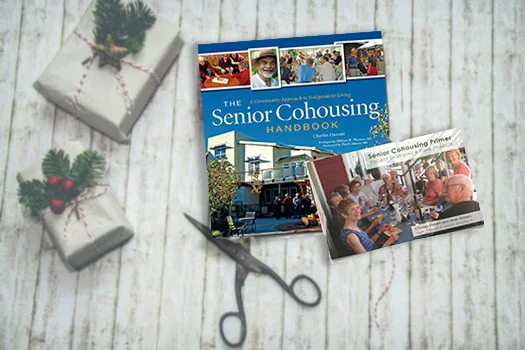
Look no further for your gift giving this holiday season! The Senior Cohousing Handbook: A Community Approach to Independent Living is a classic cohousing book and is used worldwide as a guide to getting senior cohousing projects started and sustaining them for decades to come. Senior Cohousing Primer: Recent Examples and New Projects is a perfect companion to The Handbook, giving folks an easy to understand look at the senior cohousing movement today. Together, these books are the first step to getting a senior cohousing project started in your area.
For a limited time, MDA will gift wrap the books for you, signed by Chuck Durrett, and drop ship them to your loved one’s upon request! This offer extends through Dec 17 and is valid in the U.S. only. Please contact Holly at MDA.admin@cohousingco.com to place your order if you live outside of the U.S.
A New Look at Getting Older: Inspiring Adults 55+ at the Northeast Cohousing Conference

Wolf Creek Lodge, Grass Valley, CA. Architecture by McCamant & Durrett Architects
Older adults are discovering the value of taking control of their lives. Socially, financially, and environmentally it makes sense to live near people who care about you, but until you can work with others to create this scenario, it is just a good idea and nothing else. Senior cohousing communities, and groups inspired by cohousing, grow from that need to move things forward into a collective of organized and forward-thinking activists. The result far exceeds expectations, in many cases.
Being organized is being in control. While senior living facilities are taking steps to support their residents more than ever before, they still cannot offer what senior cohousing groups can. One way to begin this process is by taking Study Group 1 (Chapter 7 of The Senior Cohousing Handbook: A Community Approach to Independent Living ). After SG1, senior cohousing groups go through a series of workshops which develop cohesiveness and clarity within, along with setting expectations and later co-designing the community of their dreams. It is important to note at this point that none of this can happen without the group being on the same page and out of denial. Cohousing communities aren’t created by one visionary, but by many who share in the vision and, through consensus and being prepared, can decide what is best for all.
The result is a neighborhood that not only symbolizes their desire to take an active role in their aging scenario, but also their commitment to supporting, listening to, and living in community with each other. Learn more about senior cohousing at the Northeast Regional Cohousing Conference September 21 – 23, 2018. Cohousing expert, Charles Durrett, will lead Senior Cohousing 101, an all-day intensive exploring an effective solution to senior housing.
The intensive is limited to 20 people, so early registration is encouraged. Sign up here:
https://cohousingassociationoftheunite.regfox.com/northeast-cohousing-summit
Senior Cohousing 101 will explore the senior cohousing movement, both concept and its history, and why it is gaining popularity and proving to be a great solution to the senior housing challenge in the U.S. today. Participants will view examples of senior cohousing communities and, through group activities and discussion, will discover solutions for supporting themselves and their community age in place successfully.

For more information and an in-depth look at senior cohousing, Durrett and McCamant & Durrett Architects will be hosting an online facilitator training for Study Group 1 Aging Successfully. This 10-week course will begin Oct 10 with meetings once per week to learn how to organize local efforts for seniors, by seniors, in their area. Those interested in becoming a facilitator should contact Lindy at lindy.sexton@cohousingco.com.
Impact of Senior Cohousing

Silver Sage Senior Cohousing, Boulder, CO. Architecture by McCamant & Durrett Architects
There is a senior housing crisis in this country. In the United States, traditional senior housing options aren’t meeting the needs of older adults. Many attempts to put seniors in community have proven to work short term, but funding and employee retention continue to strain these organizations. Senior support, like Meals on Wheels, drains local economies and is constantly at risk of being dropped, which could leave seniors without access to proper nutrition and socialization. These services are also offered at the expense of the environment as vehicles drive hundreds of miles each day to bring services to older adults living alone, in their big ranch houses. As the population gets older, we are running out of options. One solution, senior cohousing, cohousing for adults 55+, has proven to mitigate loneliness and provide support to keep older adults in their homes for longer without draining government resources, and those are just some of the perks.
Older adults around the United States (and around the world) are making a strong case for why living in a high functioning community is important to them, economically, physically, emotionally, and socially. What seniors need (and want) is to be in the driver seat, to take control of their aging scenario. What they desire is to create their own community. Senior cohousing is gaining popularity, meeting the needs of seniors internationally, and is proving to be a solution to housing seniors in the neighborhoods of their dreams, supported by their neighbors and friends.

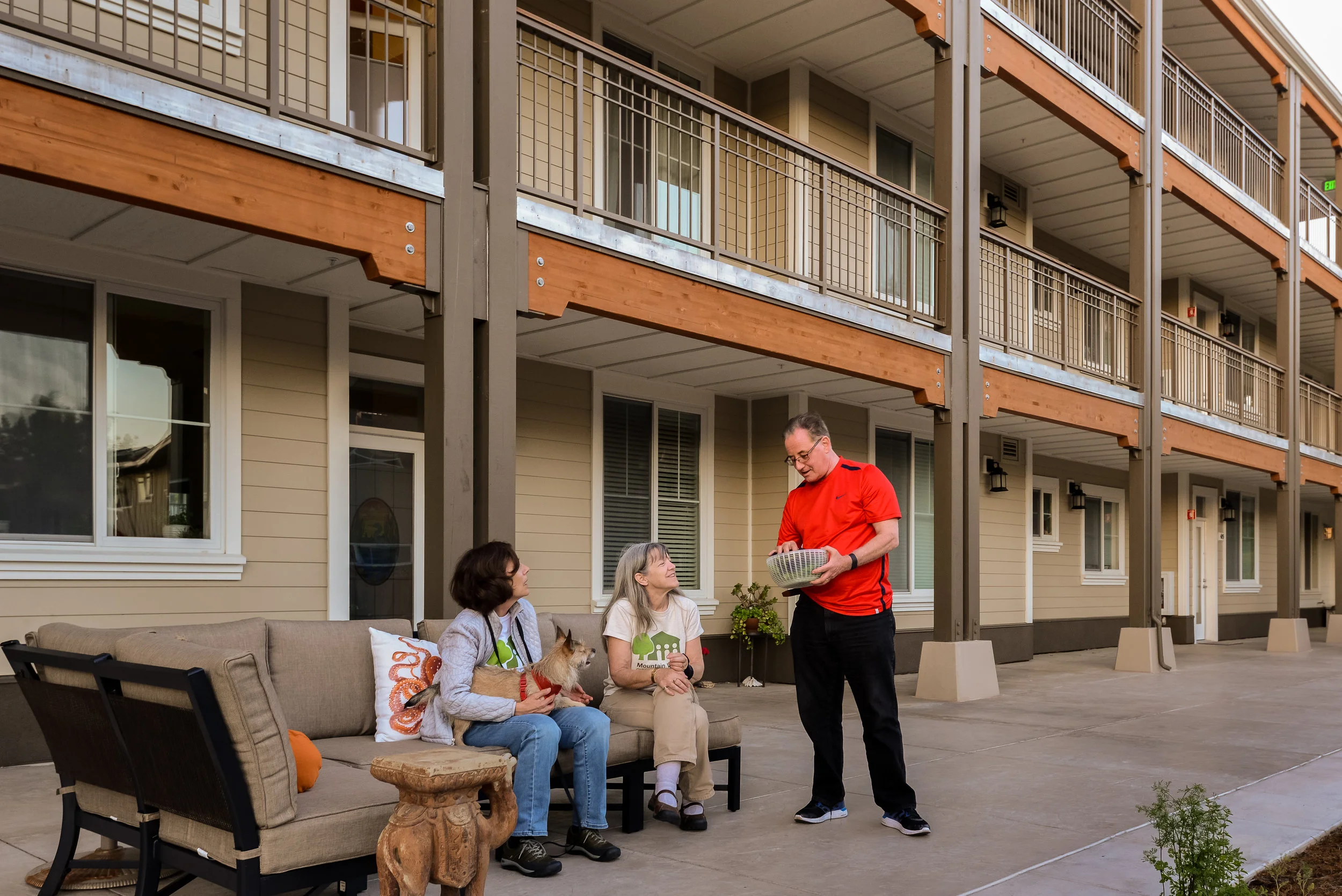
Mountain View Cohousing, Mountain View, CA. Architecture by McCamant & Durrett Architects
As a national leader and innovator, Charles Durrett has dedicated his career to creating cohousing neighborhoods, including a dozen senior cohousing. His book, “The Senior Cohousing Handbook: A Community Approach to Independent Living is an invaluable resource used by cohousing groups around the world and his continued dedication to appropriately housing older adults propels much of his life’s work. Durrett will be leading an all-day intensive Senior Cohousing 101 at the Northeast Cohousing Conference on September 21, 2018. Participants will learn about cohousing, discuss challenges in senior housing, and explore why senior cohousing just makes sense. The intensive is open to 20 people so early sign up is highly encouraged.
Register at: https://cohousingassociationoftheunite.regfox.com/northeast-cohousing-summit
We look forward to seeing you there!
For more information and an in-depth look at senior cohousing, Durrett and McCamant & Durrett Architects will be hosting an online facilitator training for Study Group 1 Aging Successfully. This 10-week course will begin Oct 10 with meetings once per week to learn how to organize local efforts for seniors, by seniors, in their area. Those interested in becoming a facilitator should contact Lindy at lindy.sexton@cohousingco.com.
