
SAGE Cohousing International and Quimper Villagers Co-present at the Conference
Written by members of Quimper Village

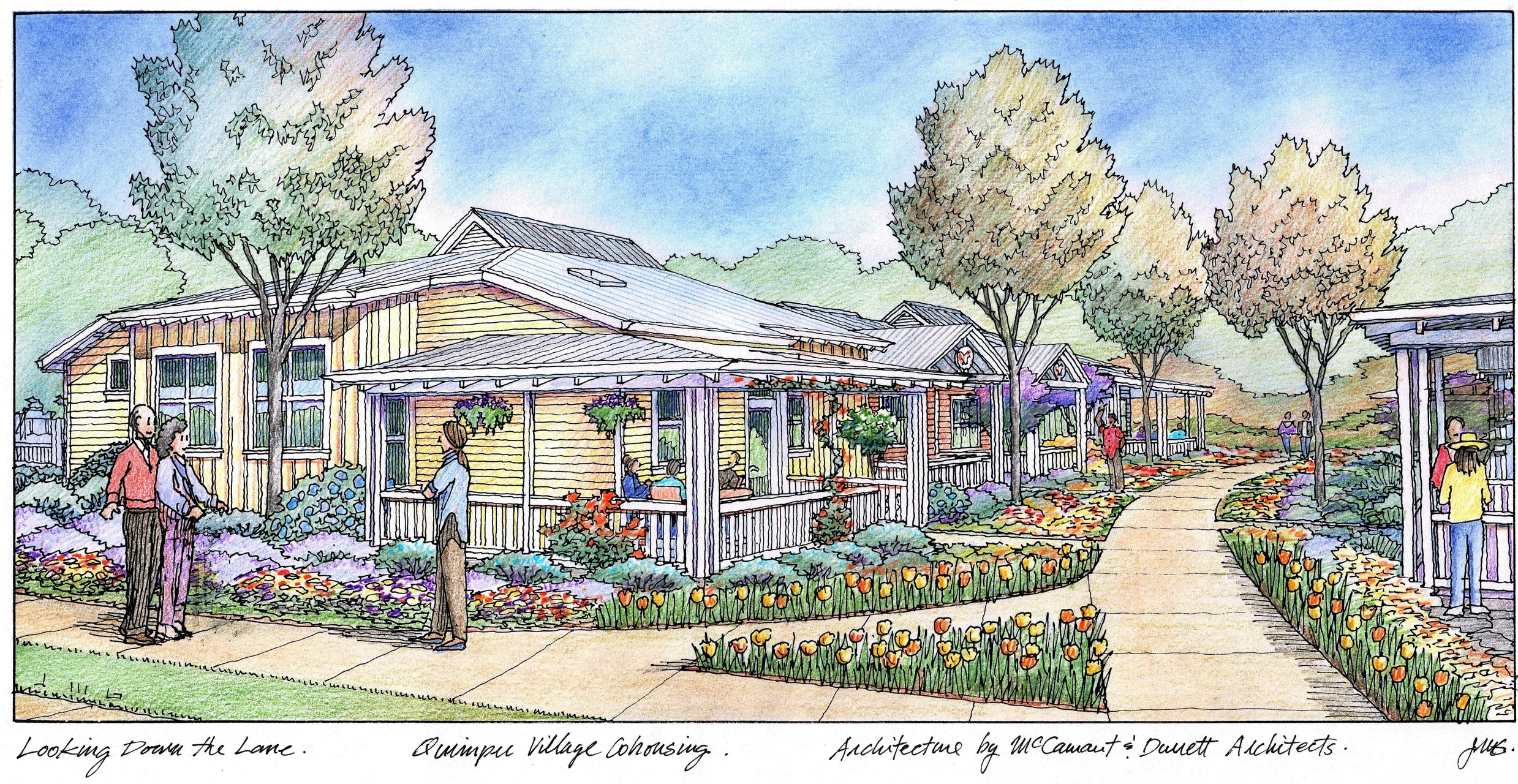
We are thrilled to announce that three members of Quimper Village will co-present Senior Cohousing: A Roadmap to Starting a New Community with Chuck Durrett at the 2017 National Cohousing Conference from May 19-21. Carolyn, Pat, and David H. will talk about how they successfully formed a group, the importance of having roles with a group, and the latest updates on their favorite cohousing community, Quimper Village. The all-day intensive will include valuable information for anyone looking to start their own senior cohousing project and participants will have the chance to brainstorm what their scenario will look like through breakout sessions and small group conversation.

Creating a senior cohousing community can be an exciting and very fulfilling life event, if the group knows what they’re doing. Quimper Villagers benefited greatly from finding complimentary skills from members within their group, and hiring Chuck Durrett (McCamant & Durrett Architects) and Katie McCamant (CoHousing Solutions) as consultants on the project. Through guidance and with a steadfast vision, Quimper Village is now nearing move-in in record timing.
Are you looking for the next steps to creating your senior cohousing community? Sign up today for Senior Cohousing: A Roadmap to Staring a New Community and then check out these two blogs for more information: “Looking for the Next Steps in Creating Your Senior Cohousing Community?” and “The Roadmap and Why It’s Important to Have One".

The 2017 National Cohousing Conference offers a wide variety of topics of interest to co-housers from getting a favorable mortgage to running an effective meeting. There is still time to register for the conference being held in Nashville on May 18-21. We hope to see you there!
The Roadmap and why it is important to have one
Older adults around the United States (and around the world) are making a strong case for why living in a high functioning community is important to them, economically, physically, and socially. Many attempts to put seniors in community have proven to work short term, but funding and employee retention continue to strain these organizations. What seniors need (and want) is to be in the driver seat, to take control of their aging scenario. What they desire is to create their own community.

Wolf Creek Lodge, Grass Valley, CA
So, you’ve got the dream. But where do you begin to create your own community? How do you get others to join you? Who do you work with to help you figure it out? When you’ve moved in, what then? These questions are no doubt challenging to address and, if you don’t know what you’re doing, they can lead you down a rabbit hole with no end in sight.

I often hear from people at various points in their journey, looking for the next steps. In response to these inquiries, I will be presenting Senior Cohousing: A Roadmap to Starting a New Community, with SAGE Cohousing International. This is an all-day intensive, as part of the 2017 National Cohousing Conference in Nashville, Tennessee on May 19. It will give participants a concrete roadmap to move forward on their senior cohousing community, no matter where they are in the process. Learn how to get older adults in your region organized, get an overview of how to manage finances, learn how to secure property, and much more!
If you, or anyone you know, are ready to get started on creating the community of your dreams, a community that not only looks beautiful but also feels warm and giving, don’t miss out on the opportunity of a lifetime and sign up today!

R.I.P. Jan Gudmand-Høyer, a visionary in cohousing
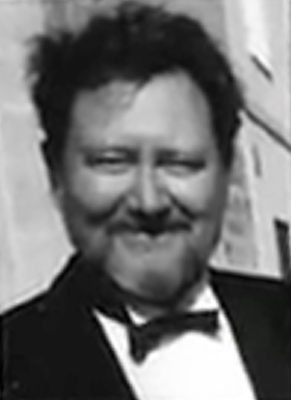
Jan Gudmand-Høyer 1936–2017
The man who started cohousing in Denmark, and therefore the man who started cohousing, died Monday, March 6, 2017, at 81 years old. Jan came up with the novel idea that to make a neighborhood that truly fits the needs of the individual and society—you have to design it to fit true needs and wants. In 1964 Jan gathered together friends and acquaintances to talk about housing. He asked them to imagine a lifestyle and a place that did not yet exist, a place that could suit the needs of ordinary citizens, an intentional place that was different from what mom and pop, or grandma and grandpa had created for themselves. “What really makes sense for people in late twentieth century, western industrialized societies?” was his query. He recognized that different generations have different needs. Mothers were working outside of the home, families had fewer children, and folks were living longer. He wanted to figure out what would make it easier for them to actually express their values of living lighter on the planet while championing gender equality and increasing civic participation. He wanted to know what would make our lives more practical and more healthy. He wanted to create a way of life that made more sense. As they discussed it, notions of balancing privacy and community, private ownership and sharing, became recurring themes. He started with nothing but the intent to be truly responsive to real concerns, not perceived ones. Devoid of preconception on purpose, not wanting to rely on the rear view mirror, Jan spurred a self-development movement that spread throughout Europe, and then the world.

Jan and Charles walk through Skraplanet, one of the first cohousing communities built by Jan in Denmark.
Jan was the quintessential communitarian, always seeking but always turning what he learned into practice. For example, as soon as read about Sardinia and their heightened and measurable demonstration of community, he went there to learn from them. Over the course of a month, he studied in great detail, of culture and nuance, of place and benches and chairs. When it came to healthy human interaction, no detail was too small.
With great fun, in 2001 Jan & I sailed the Mediterranean with his wife, Angels, and his son Yakai. As we entered each tiny port in Greece, or Turkey, it was fun to compete to be the first to exclaim, “Now this is community.” There we witnessed moms, dads, and grandparents on the wharf, playing dominos, breaking bread, and children running all around. Instruments came out at dusk, then dancing and singing.
Jan Gudmand-Høyer and Angels together designed well over forty cohousing communities, each one being the model for the next one, each one being better than the last. It was to the point, that the last time I visited him, he only wanted to discuss his latest, although many were stellar.
We loved Jan dearly. Jan was our greatest inspiration, mentor, and truest of friends. He and I resonated at every level. He was truly the most humanistic person I’ve ever had the honor to know. He never lost faith in the human potential to build a healthy society one neighborhood at a time. I miss you dearly, Jan.

MDA featured on the Greenpreneur Show Feb 2017
Michael Thomas, host of the Greenpreneur Show, sat down with Katie and Chuck in early February to talk cohousing. The Greenpreneur Show is a progressive radio show, based in Chicago, with a focus on environment and sustainability in the modern day.

East Lake Commons, Architecture by McCamant & Durrett Architects
Criteria for Senior Cohousing
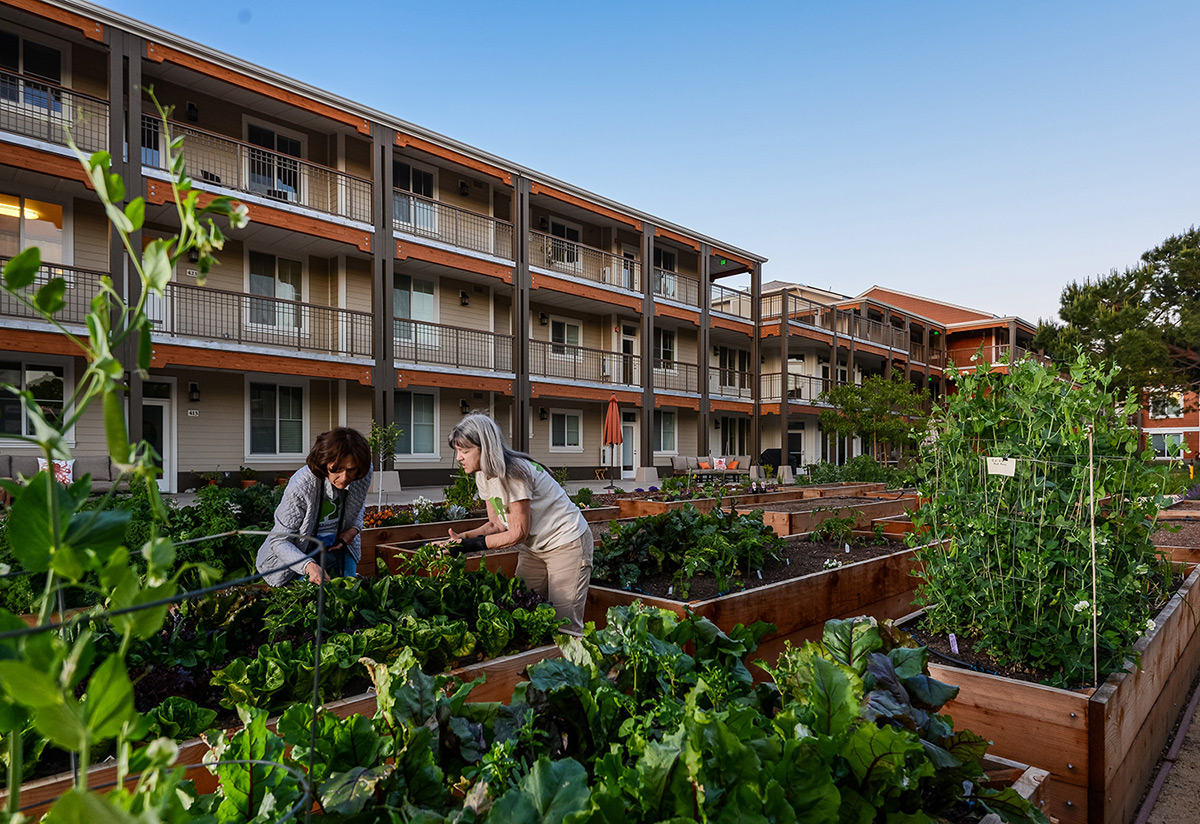
Mountain View, CA
CRITERIA DEFINING SENIOR COHOUSING CERTIFICATION
Preamble: Americans are fast and furious with the English language, especially when it comes to Real Estate. The business plaza without the plaza, the industrial park without the park for example.
There are already lovely communities that call themselves cohousing that are in fact very cohousing inspired, cohousing-like, and are lovely places for sure—but are not cohousing.
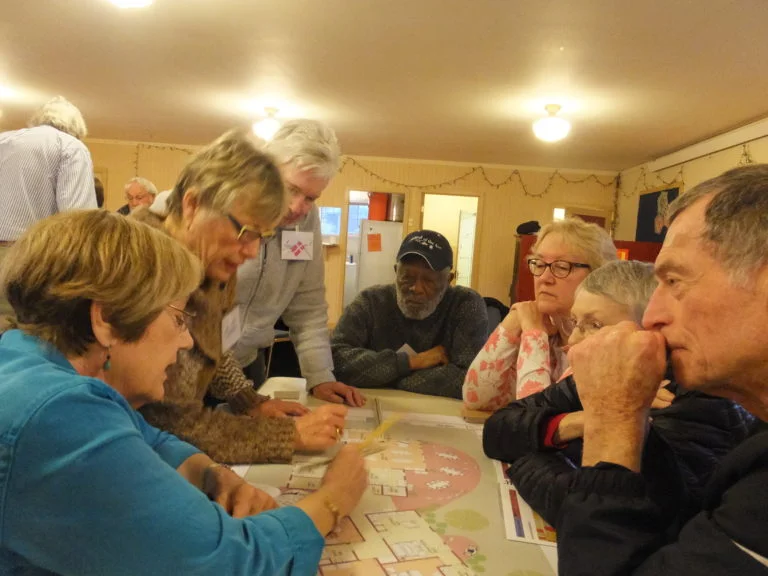
Quimper Village, Port Townsend, WA
Criteria that Define Cohousing:
1. Co-developed, co-designed, and co-organized with the group. First and foremost the future residents are an integral part of creating the future community.
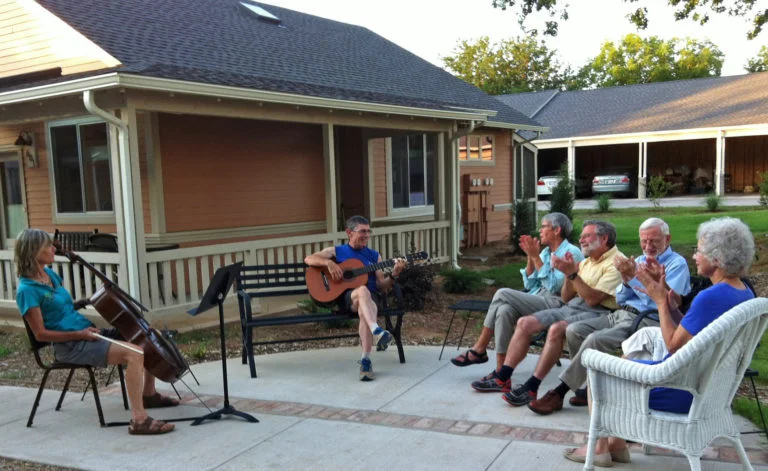
Oakcreek Community, Stillwater, OK
2. A private home but also extensive common facilities that supplement and facilitate the daily living. Common facilities are perceived as an extension of each resident’s house and supplement each home. There must be practical excuses to bring people together – otherwise they are just “back at the house.” Common meals at least once a week. There is no more timeless means of sustaining community than breaking bread together.
3. Designed to facilitate aging in place with good acoustics and ample lighting for all ages; ergonomic details; Universal Design principles (but stairs are OK); and Co-care, mutual support systems, and interdependence during illness or convalescence through community, and cooperation.
4. Designed to facilitate naturally-oriented community interactions over time. Not auto-oriented, but every electric wheelchair, Segway or other personal vehicle necessary to keep the site auto-free except on rare occasions.
5. Completely resident managed. The residents – who are the owners of their own homes – in a cohousing community have the privilege and responsibility of determining how they will organize themselves and the work (and play) of managing their own lives and homes.
6. No hierarchy in decision-making. Cohousing is about cooperation rather than type of ownership. And, as it turns out, cooperation transcends ownership type.
7. No shared economy. Unlike that of the commune or sometimes a co-op structure, cohousing community members do not share personal income.
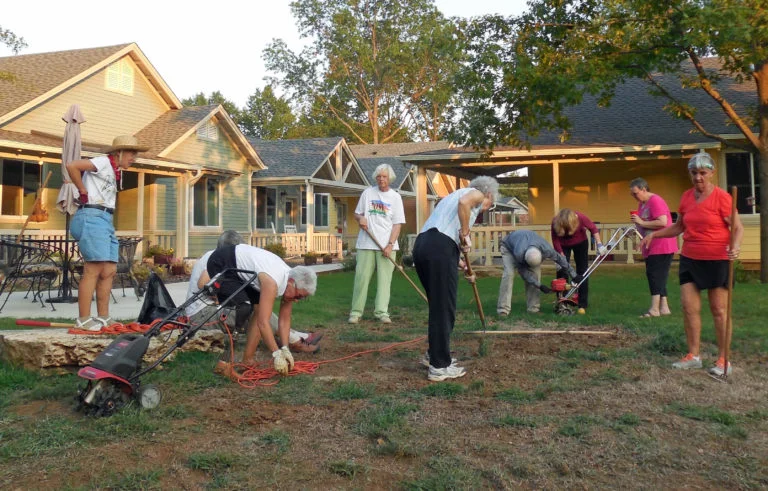
Oakcreek Community, Stillwater, OK
Being clear about nomenclature and certifying senior cohousing is as much about consumer protection as anything. Selling seniors “lake front” property without a lake is just not the right thing to do. Likewise, selling cohousing without the co (co-designed for example) means just selling real estate, without the value added by the co.
We’ve already seen the marketplace try to sell “new and improved” senior housing, labeled as cohousing but without the co. In these facilities, rooms to fit the needs of the community are too small. Rooms that fit the prejudices of the developer are too big. The common houses in these facilities get less than 100 people-hours of use per week, instead of 400 people hours in a genuine, high functioning senior cohousing common house. And the wrong-sized and ill designed rooms did not save money. They just diminished the use and therefore the community.
Unfortunately the temptation to build senior housing without the co is based on the misconception that co-designing will slow the process down, but it actually speeds it up. When we co-developed/co-designed Cotati Cohousing in less than 3 years, Cotati outpaced the other three brand new projects surrounding it. Those three neighboring projects took 5, 5, and 7 years to develop. They took longer to get through city approvals because they hadn’t involved the future residents. For senior cohousing to continue to be faster to build and higher functioning than other senior housing alternatives, what is and isn’t senior cohousing must be clearly defined and actively defended. We’ve already seen too much real estate labeled “Business Plaza” with no plaza, or “Industrial Park” with no park. Marketers are cavalier when it comes to real estate nomenclature, but S.A.G.E. will work hard to preserve the integrity of senior cohousing.
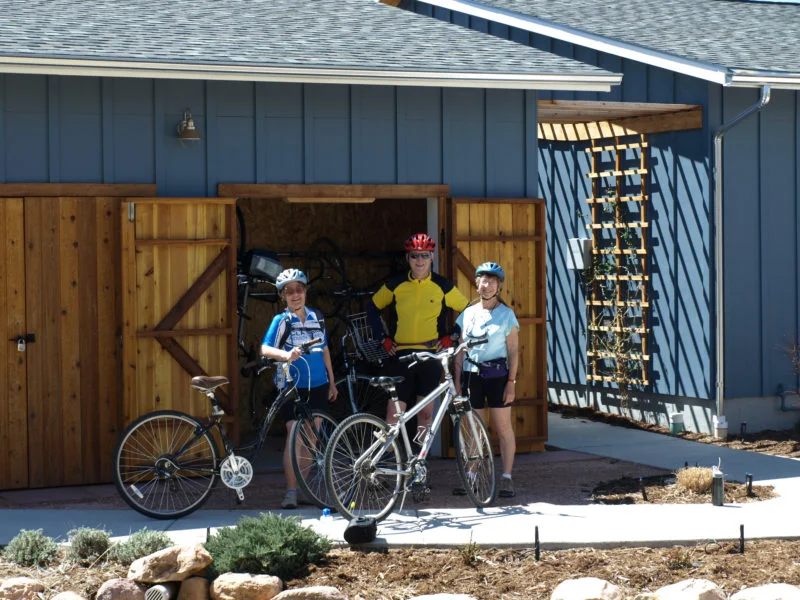
Silver Sage, Boulder, CO
Others have suggested many additional criteria around universal design and some defined level of spirituality and accessibility. We find that future residents define these very well themselves. In fact, they do so much better than we ever could. We wouldn’t want to tie their hands, especially in regard to costs and personal choices. In the end, all of the discussion about facilitating co-care and mutual support will be worked out by the future residents themselves. See senior cohousing communities Oakcreek Cohousing in Stillwater, OK; Quimper Village in Port Townsend, WA; Mountain View Cohousing in Mountain View, CA; Wolf Creek Lodge in Grass Valley, CA; and Silver Sage in Boulder, CO as great examples and models.
Our ultimate goal with this certification is consumer protection and what better way to make sure we do this right than go to the consumer. Pat Darlington, and David and Pat Hundhausen of Oakcreek senior cohousing and Port Townsend senior cohousing (resp.) co-authored this certification program. It is through individuals like these cohousers and the dedication of SAGE that senior cohousing will become readily accepted as a successful model for seniors in the U.S. and around the Globe.
Thanks for adhering to these criteria when naming your project “Senior Cohousing”.
Please contact us at SAGE Cohousing for your certification. (www.sagecohousingadvocates.org)