
The Cohousing Company & Charles Durrett: Repurposed
Shifting Modus Operandi

I thought about retiring at the start of pandemic, but somehow, I found myself continuing to work on a dozen cohousing communities and other projects since then. I’m convinced now that what I meant and still want to do is to repurpose, not retire.
Instead of doing the full working drawings and the full construction administration for new cohousing communities, I found that the experience we have makes it easy to do new cohousing communities expeditiously and affordably if we just do design criteria and schematic design with the group.

We just finished a Design Criteria and Schematic Design for a new community in 6 weeks, when they had been working on that project for 8 years. We have also designed a new school and a new community for the Chickahominy tribe in Virginia in 6 weeks and a new homeless project in just a couple of weeks.
When Frank Lloyd Wright was interviewed by Michael Wallace about why he didn’t retire at the age of 87, FLW replied “now when I shake my arm, building designs just cascade from my sleeves.” Of course, many cartoons of that ensued. I am not saying that I am Frank Lloyd Wright, but I have learned that after 55 projects, that experience means a lot—at least many lessons have been learned, especially how to make a community work optimally, how to do it most affordably, and without delay
(see Chapter 13 & 14 of Cohousing Communities: Designing for High-Functioning Neighborhoods)
Cohousing Communities
Designing for High-Functioning Neighborhoods

We are more than excited to announce that the new definitive book, Cohousing Communities: Designing for High-Functioning Neighborhoods, is now available for preorder through Wiley and Amazon for only $39.95.
The book will also be available to purchase for the first time at the Cohousing Conference in Madison, WI author's showcase, where Charles will be presenting and hosting a book-signing as well.
Perfect for everyone—from architects and housing advocates to young families and senior citizens—who strive to see new ways to create neighborhoods, Cohousing Communities: Designing for High-Functioning Neighborhoods compiles facts and concepts that are essential to the design of a high-functioning community, where people can participate in a way that reflects their values, improves their social connections, and retain their autonomy and privacy.
Here are some excerpts from the book:
People-Hours per week
How is this calculated? People often say, “it must be difficult.” In fact, it can be extremely fun and it’s critical for improving discussions and designs over time. Nevada City receives about 450 people-hours per week and Trudeslund gets about 750. And these metrics are key to post-occupancy evaluation—“Does it work or does it not work?” should be an objectively answerable question.

Zoning/Racism/Affordability
Since zoning practices began in the U.S in 1916, they have been used to keep classes and races separate (see Chapter 7), and redlining continued to reinforce that in the 1930s. Cohousing can uniquely challenge these racist legacies more effectively than other means, because it brings the people to the planning table.

Cohousing Certification
There are communities that inadvertently call themselves cohousing that are in fact very cohousing inspired, cohousing-like, and are lovely places for sure, but are not cohousing. I firmly believe cohousing needs to be certified for its continuing success, just as organic farming needed certification before it really took off in the US.

Testimonials from reviewers
In Latin they call it a “Magnus Opus.” In Danish we call this a “A Work of Consequence that is Long Overdue."
This book does not just list model projects, Chuck also lays out the process, the details, the intent, and the product and everything necessary to accomplish a high-functioning neighborhood—every thing necessary to make a quality community.
Hans Rasmusen, Denmark
Cohousing: A Political Act, a Business Act, and Culture Change
RE: New York Times Articles: They Took a Chance on Collaborative Living. They Lost Everything. February 11, 2022
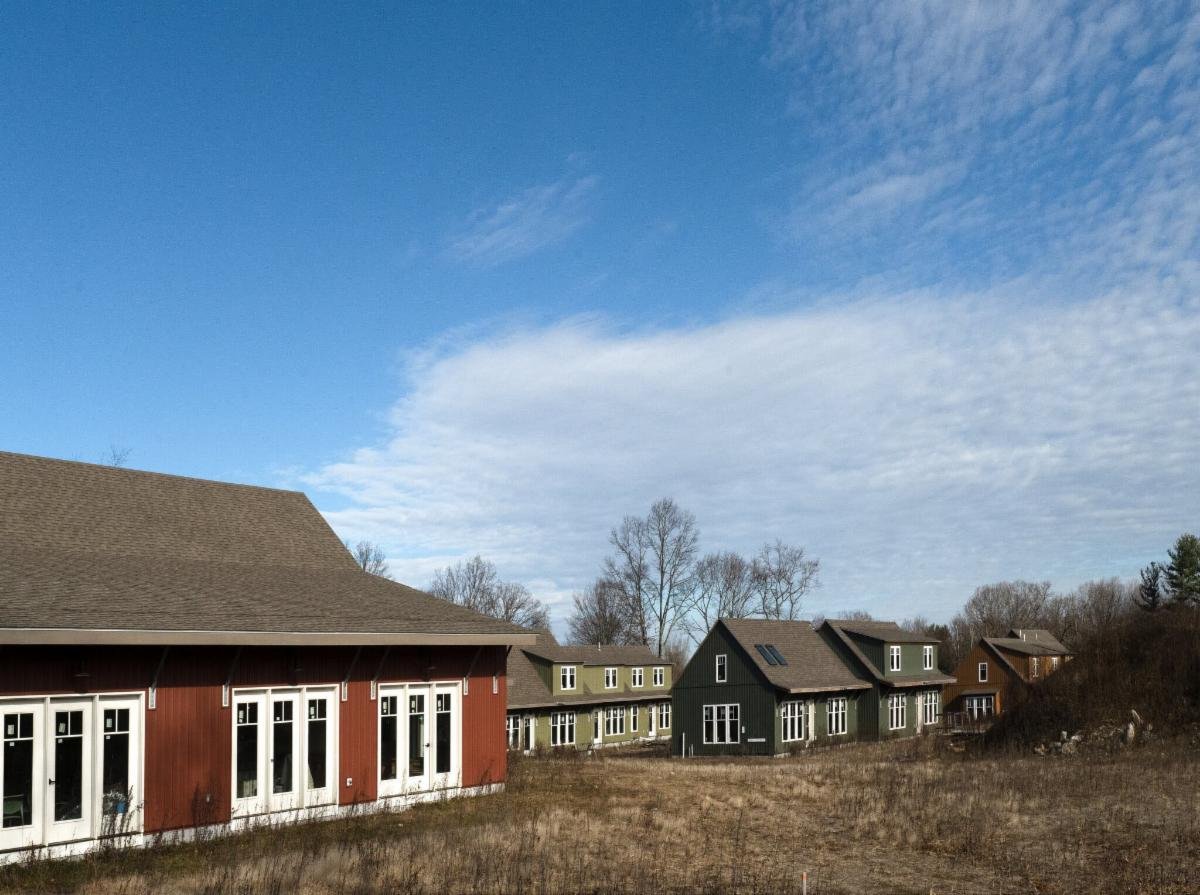
After seven unbelievably positive articles by The New York Times about cohousing (see cohousingco.com), it was inevitable that they would “balance” that track record and point out one when things went south. But it was also inevitable that a cohousing business deal would go south eventually.
Katie and I perhaps overemphasized in our first book, which brought cohousing to North America, how grassroots cohousing development was in Denmark. We were young and idealistic and enamored with “the people just doing it” and that was what we emphasized. But it wasn’t until my fifth trip back to Denmark when Jan Gudmand-Høyer finally got it into my head all of the various clearly extraordinary skilled players that it really took to make a successful cohousing community happen.
And he was right—good cohousing is just as complicated as flying a commercial airplane if not more. The emphasis on community is critical to the ultimate success no doubt, but navigation on the business side is just as critical.
It is a political act, an anthropological study, a business act, a careful design process, and culture change.
And it takes a village—a village of passionate cultural creatives who truly believe that high-functioning neighborhoods are the future we all deserve, and we need experienced professionals to make that future come true.
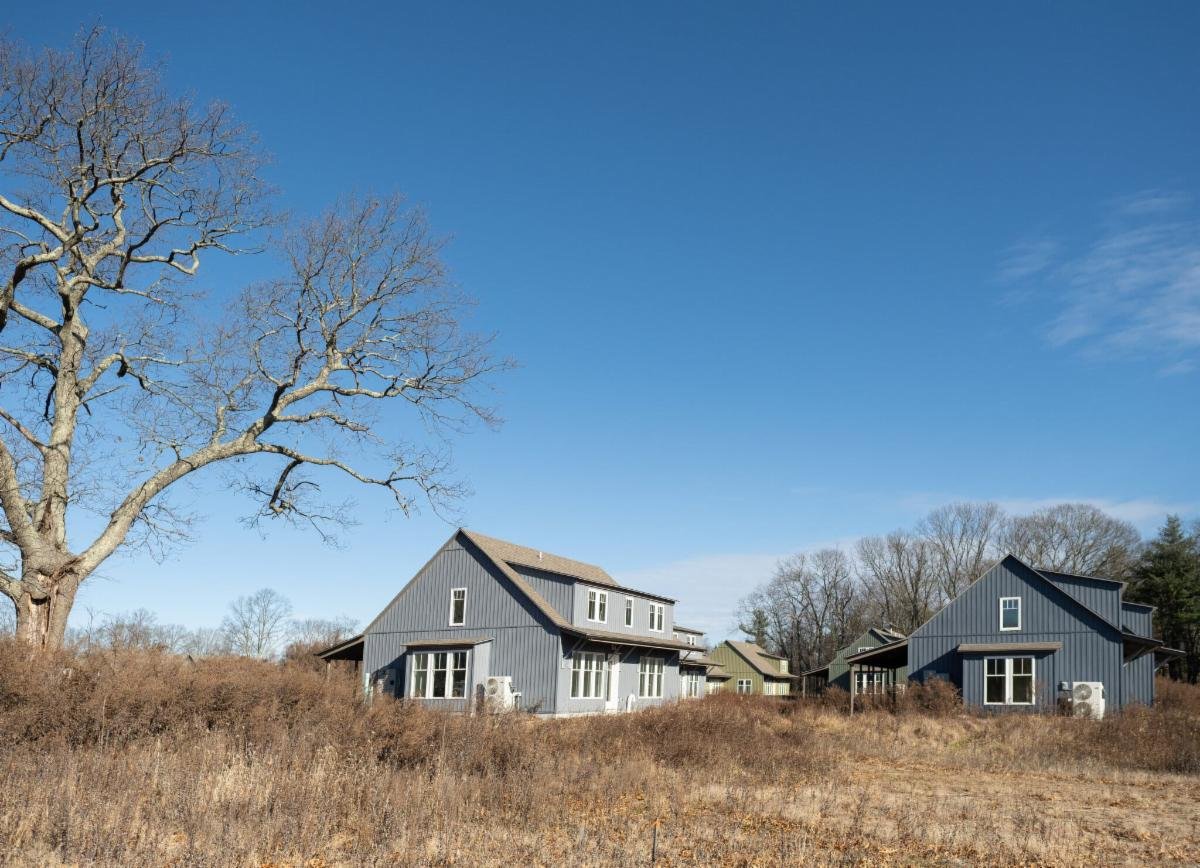
While we extensively cover the design principles that contribute to what make a cohousing project successful in our latest book Community-Enhanced Design: Cohousing and Other High-Functioning Neighborhoods—from having thorough sets of programs & design criteria to common house designs that maximize people-hours, we also emphasize the importance of group process and project management in the success of cohousing. The New York Times article about the new cohousing group in Connecticut provided us with a wake-up call and a number of valuable lessons on this topic, including:
1. Not having adequate timelines, which translates to under project managed.
2. Under-considered feasibility/due diligence (Rocks).
3. “Bureaucratic” delays because someone didn’t know how to get the politicians on board. Projects should take no more than 9 months to get approved—and that process has to be specifically engineered.
4. A project in Eugene, OR originally had a $465K water hook-up fee requirement that went to a $45K hook-up after talking to the right (5th) engineer. You have to find the right people and negotiate every line item.
5. Yarrow had a perfect on-site sewer system (See C-ED and Creating Cohousing).
6. Renegotiate with the bank (see Katie McCamant or similar).

But believe me, professionals alone do not and cannot create a successful cohousing community. There is no better example than the story of Nevada City Cohousing. Prior to our submission to the city, 3 different experienced developers each spent great fortunes developing a non-cohousing proposal and they all failed.
However, with the involvement of the residents, including schoolteachers and single moms—sharing their needs for affordable yet high-functioning neighborhoods, the proposal of Nevada City Cohousing was approved by the city despite the existing nimby culture.
There are also other instances where the developers alone tried to make cohousing projects (Colorado and Petaluma, CA) and proved to be complete and total flops.

With our experience designing more than 55 cohousing projects in North America, we highly recommend you getting The Cohousing Company or similar to help you figure out if your development scenario will succeed or fail. A group that is too head strong will fail. This recently happened in Northern California. A professional developer who knows the tricks of the trade but carries the predominant attitude of the trade (control, control, control) will fail, fail, fail.
In the book Community-Enhanced Design, we delineated the stories of 18 projects that are very affordable because of a good mixture of group and professionals.
Cohousing takes humility on all sides and an ability to work together in harmony. But you have to have the minimum cast of characters at the table. Yes, it is “heart breaking” what happened in Connecticut, so please look at both Creating Cohousing and CED—do the homework necessary to do these projects right. As my Mom used to say, “if you can’t find the library, you will forever be lost.”
Anna Got Her Rake – A Prologue to Community Organizing


Eugene Oregon has the highest rate of homelessness of any city in the United States. While there are a number of factors that contribute to this seemingly insurmountable issue, from drug addiction, lack of education, mental illness, we still believe that it is an issue that can be overcome. Like every problem in our lives, a solution has to start somewhere, and in this case, we believe that it must start with community organizing.
'People who are homeless are not social inadequates. They are people without homes.'
— Sheila McKechnie
Community organizing not only creates a sense of belonging and empowerment to people who are currently without a house at all, but it also creates an opportunity for an open dialogue that allow other people to hear their stories and see them as human beings, dialogue that allow other people to hear their stories and see them as human beings, instead of being criminalized and dehumanized by outdated laws and false narratives. This is what we tried to achieve when we spent three days at Washington-Jefferson Park in Eugene.

After hearing about the tension between the people who live inside the park and the residents in the surrounding neighborhood, we decided to spend three days to see if progress could be made. On the first Sunday we learned about the problems from neighbors and park residents. On the next Saturday, we started our day by talking to the residents of the Washington-Jefferson Park in detail about potential solutions.
It was both refreshing and saddening to hear their voices and narratives, their tone shifted from joyous to distressing when some described their loving childhood in comforting homes compared to their current living situation now. We asked them if they would be willing to have a community meeting with their neighbors from the houses surrounding the park on the following day, so not only can they hear these stories, but also talk about how they can promote a healthy relationship together. While some people took time to think about it, they all eventually agreed to show up. Consequently, we spent the other half of the day talking to the neighbors who lived in the surrounding houses and apartments again.
While some people quietly listened and nodded their heads about our plan, some neighbors did have opinions and stories they wanted to share. Some were quite unhappy with the sight of litter and drug use, and generally blamed it to the residents of the park. Some truly believed that the park residents were not the problem at all, and agreed that an open dialogue was necessary for a better relationship and future. Sunday morning comes, and we arrived at the lively Washington-Jefferson Park, as the sound of music and the smell of BBQ that the church group put on flew through the air. We were fortunate to talk to some of the church organizers, one of whom used to live in the park as well.


Finally, the meeting began. While there were not many people from the neighborhood who showed up, we still had great conversations with the residents of the Washington-Jefferson Park. We asked them about their opinion on how to improve the current situation, from maintaining clean sidewalks and tents, neighborhood wide relations, to a potential exit strategy — an alternative to what the city had been planning (moving them further from downtown).
One of the residents, Anna, was very enthusiastic and involved in the conversations. At the end of the meeting, she mentioned that her handicapped husband, along with many other people, were frustrated with the lack of maintenance in the site, as falling leaves and mud had been accumulating on the sidewalks to the point that it was too slippery to walk on. Especially going to port-a-potty in the middle of the night. So, we decided to go to a neighbor’s house, and asked her if we could borrow one of her rakes. She had a half-a-dozen. Even though the neighbor declined, they still had a decent conversation and dialogue with each other.
At the end of the day, Anna got her rake, and we believed that we took the first step of many to improving neighborhood relationship through community organization and clean up. We bought her a rake and it made her gasp with joy. It made her day, if not her week.

Having done thousands of hours of community organizing in my day, the way that it works in this case is that it is very cumulative, and the effectiveness from week to week goes up rapidly but not at the first meeting.
'Community organizing is all about building grassroots support. It's about identifying the people around you with whom you can create a common, passionate cause. And it's about ignoring the conventional wisdom of company politics and instead playing the game by very different rules.'
— Tom Peters
That is, this first meeting is just the tip of the iceberg, i.e., there is only a tiny bit of collective functionality, a sense of belonging and positive identity that comes from it if any. Subsequently, you give a write up to all about what a great meeting it was, and people start to think about what they might have missed, where they can fit in, what decisions might have been made or be made without them and what key opinions are missing — then they will want to get involved. Usually, not a lot of opinions are missing. In fact, there is a lot of repetition, but get people signed up to do talks and start to embrace the new culture of accountability and cleanliness. Eventually, the iceberg floats higher and higher until most of it is exposed.
Now many folks are contributing, raking the sidewalk, cleaning up trash and litter, and talking to each other about common guidelines and etiquettes “we have agreed not to do that,” which will be continuously fostered by the previous discussions and agreements. This eventually can lead to more feelings of mutual accountability, most importantly to each other — “Hey Joe, we told the neighbors that we wouldn’t make that much noise,” people helping those having health difficulties, making dinner for each other, and setting standards for healthier living, including tent management, noise, and litter.

The next thing to do in Eugene, like everywhere else, is to find local community organizers to help with community-wide relations, help the tent community itself and its inhabitants, and to plan for an exit strategy. “How are we going to interface with the City so that they will listen to us?” This is how — by getting organized.
This story is about empowerment. People talk a lot about what is needed is structural change of one kind or another — as if that is going to happen from the entitled down, and whatever “structural change” means. Those big changes do not happen in the U.S. and too many are waiting for structural change. Change in America happens at a glacial pace — one state law, one city resolution, one meeting at a time and one march at a time. But it does happen if we get organized. Change will happen for homelessness in the U.S., but it will keep getting worse until people get organized. Not just to create demands, but to practice initiative, to be a part of the solution themselves, and to march.
There is so much potential there. Yes, we should clean up the camp; yes, we should take care of each other; yes, we should make the neighbors feel more comfortable — but then march to Salem, the capital of Oregon — all 10,000 of you plus supporters. It worked for gay pride, it worked for civil rights and languishing in the mud will not work for you. It is completely wrong that the good city of Eugene should suffer the brunt — for trying to be helpful. Every city in Oregon should be required to have at least one decent community (see A Solution to Homelessness in Your Town). Instead, people flock to Eugene away from where they grew up to get a decent meal on Sunday morning.
There are amazing groups of people in Eugene doing amazing work for people who are experiencing homelessness. It is mostly crisis work, medical emergencies, and donations, to keep people from starving, freezing, and dying which is happening all too frequently. What is needed in addition is more global organizing. One rake at a time, one march at a time, and then soon these cries will be heard, and acted on — but only if we can find some community organizers to help.
Thank you,
Chuck & Nadthachai
New Book in the Works: One Life - Live It
Charles Durrett was inspired by a community for people with intellectual disabilities in Iceland. It is called Solheimar and it was founded in the 1930’a by Sesselja Hreindís Sigmundsdóttir. When Charles visited in October 2019, he decided to start a book about this astonishing place. Now, the goal is to have the book completed by July 2020, so it can be presented on Solheimar’s 90th Anniversary.
Here’s a clip from the introduction:
“…For so many reasons, this place is a haven. Everyone refers to each other as a friend. It may seem like a small detail, but yes, in this case I do believe that the semantics make a difference. Starting with the forty-five ‘clients’ (for far lack of a better term) who, with their families, are motivated to see people have a better, more fulfilled life. I’ve never seen people, in this case social workers, invoke love and appreciation for others so readily and predictably as here. They have clearly embraced the notion that these are friends, and we are all equal. The workshops that Solheimar residents participate in include candle making, gardening, tree planting, weaving, ceramics, photography, visual arts, wood working, and drama…
In telling this story, I want to be honest and clear because there is a lot to be proud of in Iceland, from the local government to the people who work and live here. My hope is that this project will become a model and an inspiration for similar projects in the U.S., Canada, and the rest of the world. Too often there is too much humanity left on the table for those with neurological challenges, and as a result, people in need are literally wasting away. This place can teach us so much about the future...”
The name of the book is One Life – Live it, and for those who know the neurologically challenged and the lifestyle choices they can face, hopefully you’ll appreciate the title. It is the opposite of “Let’s leave lives potential behind – Let’s give up.”

